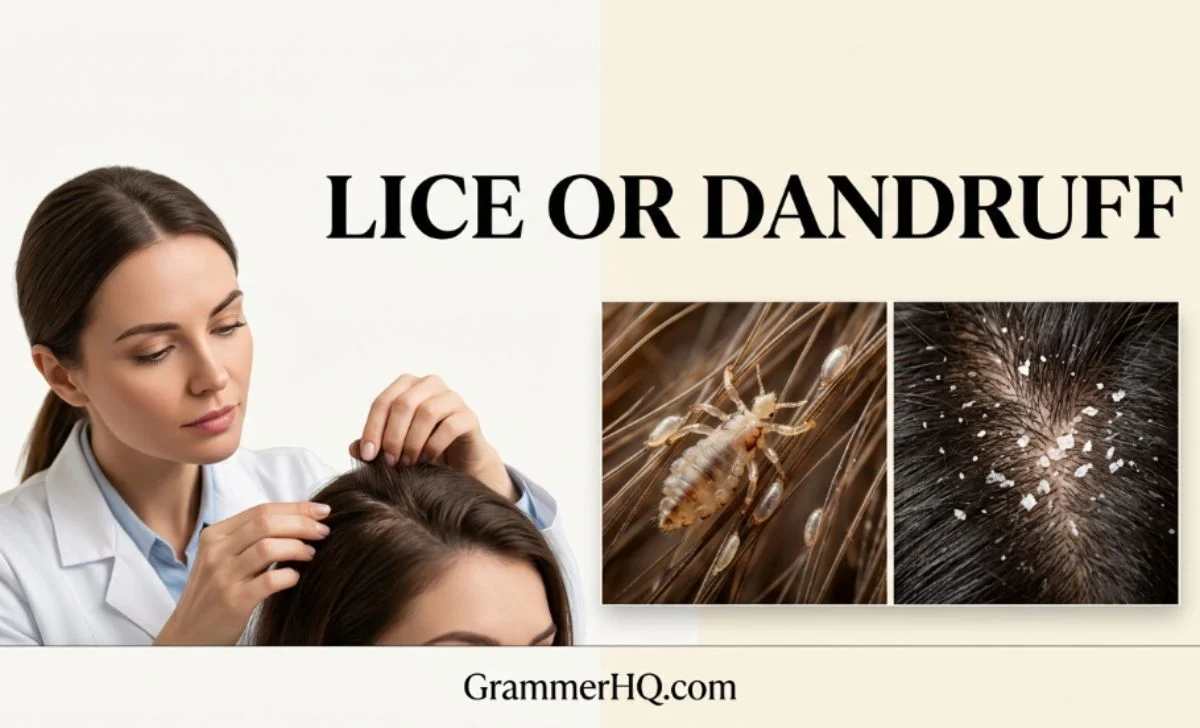
Seeing white flakes in your hair can make you wonder: Is it lice or dandruff? The two can look similar at first, especially when you notice small white or pale particles near your scalp.
But they are very different conditions. Head lice are tiny parasites, while dandruff causes flakes of skin to come off the scalp.
The easiest clue is how the particles behave. Dandruff flakes are usually loose and easy to brush or comb away. Nits, which are lice eggs, are firmly attached to individual hairs.
Finding a live, crawling louse is stronger evidence of an active lice infestation than itching or flakes alone.
Quick Answer
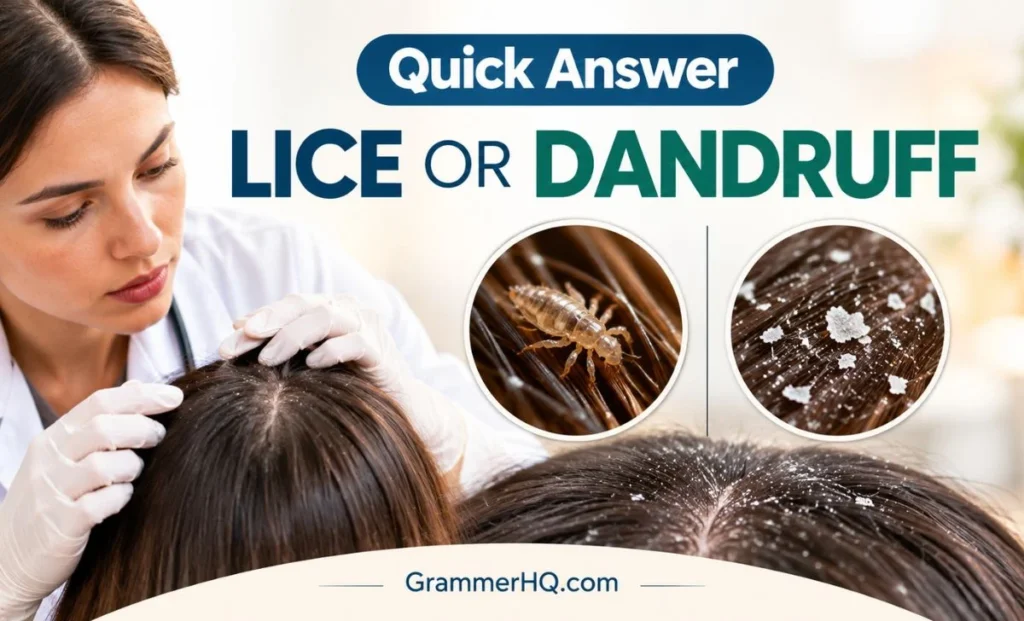
- Lice are tiny parasitic insects that live on the human scalp.
- Nits are lice eggs attached firmly to hair shafts.
- Dandruff causes loose flakes of skin to come from the scalp.
- Lice can crawl, while dandruff flakes do not move.
- Nits usually stay attached to the hair, while dandruff generally brushes or combs away easily.
- Both lice and dandruff can cause an itchy scalp, so itching alone cannot confirm lice.
- Head lice are contagious, but dandruff is not.
Lice vs Dandruff: Quick Comparison
| Feature | Lice | Dandruff |
|---|---|---|
| What causes it? | Parasitic insects | Scalp flaking |
| What may you see? | Live lice and nits | Loose skin flakes |
| Does it move? | Live lice can crawl | No |
| Is it attached to hair? | Nits are firmly attached | Usually loose |
| Can it itch? | Yes | Yes |
| Is it contagious? | Yes | No |
| Where is it often noticed? | Scalp, behind ears, nape of neck | Scalp and hair, sometimes shoulders |
| Main treatment | Lice treatment and combing | Dandruff shampoo and scalp care |
What Is the Difference Between Lice and Dandruff?
The biggest difference is the cause.
What Are Head Lice?
Head lice are small parasitic insects known medically as Pediculus humanus capitis. They live on the scalp and feed on human blood. They commonly spread through direct head-to-head contact rather than because someone’s hair is dirty.
A person with lice may notice:
- An itchy scalp
- A crawling sensation
- Scratching or scalp irritation
- Live insects in the hair
- Lice eggs, also called nits
Adult lice are tiny and can move quickly, which can make them difficult to spot. The American Academy of Dermatology describes them as light-brown insects that can resemble sesame seeds.
What Are Nits?
Nits are lice eggs. They are different from live lice.
Nits can look like tiny yellow, brown, tan, clear, or white particles. The important clue is that they are cemented to individual hairs, usually close to the scalp. They do not simply fall or brush away like ordinary dandruff flakes.
For example, if you find a tiny particle on your hair and it slides away easily when you brush it, that is more consistent with a loose flake or another particle. If it stays firmly attached to one hair and is difficult to remove, it could be a nit.
What Is Dandruff?
Dandruff is a common scalp condition that causes small pieces of skin to flake from the scalp. It can cause itching and visible flakes in the hair or on clothing, but it is not contagious.
Dandruff can have several contributing factors, including oily or irritated skin, dry skin, sensitivity to hair products, and certain skin conditions. Malassezia, a type of yeast that normally lives on the scalp, can also play a role.
How to Tell If It Is Lice or Dandruff
If you’re trying to identify what you see in your own hair, don’t rely on one symptom. Look at several clues together.
1. Check Whether It Moves
A live louse can crawl through the hair or across the scalp. Dandruff cannot move on its own.
However, not seeing a moving louse does not automatically mean you have dandruff. Lice are small, move quickly, and can be difficult to find.
2. See Whether the Particle Is Attached to the Hair
This is one of the most useful differences.
Dandruff flakes are generally loose and can often be brushed or combed out. Nits, on the other hand, are firmly attached to individual hairs and can be difficult to remove.
3. Check Behind the Ears and Near the Neck
If lice are suspected, pay particular attention to the hair behind the ears and around the nape of the neck. These are common places to find lice and nits.
4. Look at the Scalp, Not Just the Flakes
Itching by itself cannot tell you whether you have lice.
Dandruff can also make your scalp itchy, and the AAD notes that some people can have head lice without itching, particularly early in an infestation.
So instead of asking only, “Does my head itch?” look for actual lice or firmly attached nits.
5. Use a Fine-Tooth or Lice Comb
If you’re unsure, checking carefully under bright light can help. The AAD recommends wetting the hair if possible, separating it into sections, and slowly combing from the scalp outward with a fine-tooth or lice comb.
What Do Lice, Nits, and Dandruff Look Like?
What Do Head Lice Look Like?
Adult head lice are very small, light-brown insects. They move through the hair and can be difficult to see because they are quick.
What Do Lice Eggs Look Like?
Nits can look like tiny seed-like particles attached to individual hairs. Before hatching, they can have yellow, brown, or tan coloring. After hatching, the remaining shell can look clear or white.
What Does Dandruff Look Like?
Dandruff usually appears as loose flakes of skin. You may notice them on the scalp, in your hair, or on your shoulders, especially if you wear dark clothing.
Lice Nits vs Dandruff Flakes
A simple way to think about it is:
Nits stick. Dandruff flakes away.
That is not a complete diagnosis by itself, but it is a useful first clue. The CDC warns that nits can easily be confused with dandruff, dirt, or hair-product residue, which is why finding a live nymph or adult louse is the strongest evidence of an active infestation.
Can Dandruff Look Like Lice?
Yes. Dandruff can look like tiny white particles in the hair, which is one reason people sometimes mistake it for lice or nits.
The difference is usually easier to see when you examine the particle closely. A dandruff flake is generally loose, while a nit remains attached to a hair shaft.
The CDC specifically notes that nits may be confused with dandruff, hairspray droplets, and dirt.
So finding a few white specks does not automatically mean you have head lice.
Can You Have Lice and Dandruff at the Same Time?
Yes.
Having dandruff does not protect you from getting head lice. Likewise, finding flakes does not rule out a lice infestation.
For example, someone might already have a flaky scalp and later develop head lice. In that situation, some particles may be loose dandruff while other particles are firmly attached nits.
That is why checking the hair and scalp carefully is more useful than judging the condition from itching or flakes alone.
Nits but No Lice: What Does It Mean?
Finding something that looks like a nit does not always mean there is a current active infestation.
The CDC recommends looking for live nymphs or adult lice when diagnosing head lice. If you only find nits that are more than about ¼ inch from the scalp and cannot find live lice, the infestation may be old.
It is also possible that what you found is not a nit at all. Dandruff, dirt, lint, and hair-product residue can look similar.
If you’re unsure, a healthcare professional can examine the scalp and hair.
Are Lice and Dandruff Contagious?
Are Head Lice Contagious?
Yes. Head lice can spread mainly through close, direct head-to-head contact. They are not a sign of poor hygiene.
Is Dandruff Contagious?
No. You cannot catch dandruff from another person.
This is an important difference because treating dandruff and preventing lice spread require very different approaches.
How to Treat Head Lice
If you confirm head lice, use a treatment specifically intended for head lice and follow the product directions carefully.
Depending on the product, treatment may involve medication, a lice comb, and a second treatment after several days.
The CDC notes that some medicines kill both lice and eggs, while others may require retreatment because eggs can survive the first treatment.A lice comb can also help remove lice and nits from the hair.
If treatment does not appear to work, don’t simply keep applying more product. The AAD recommends seeking professional advice when at-home treatment fails or when you’re unsure how to proceed.
How to Treat Dandruff
Mild dandruff can often be managed at home.
Regular washing may help, and if that is not enough, an over-the-counter dandruff shampoo may be useful. Depending on the product, active ingredients can include ketoconazole, selenium sulfide, zinc pyrithione, salicylic acid, sulfur, or coal tar.
Follow the instructions on the shampoo because some products need to remain on the scalp for several minutes before rinsing.
For example, if a person notices recurring flakes but no attached nits or crawling insects, trying an appropriate dandruff shampoo may make more sense than using a lice treatment.
If dandruff continues despite appropriate treatment, a healthcare professional or dermatologist can check whether another scalp condition is involved.
When Should You See a Doctor or Dermatologist?
Consider professional evaluation if:
- You cannot tell whether you have lice or dandruff.
- You find suspected lice but are unsure whether they are alive.
- Lice treatment does not appear to work.
- Your scalp becomes very irritated or develops sores.
- Persistent dandruff does not improve with appropriate treatment.
- You have another unusual or worsening scalp problem.
A professional can examine the scalp and hair and help distinguish lice, dandruff, seborrheic dermatitis, eczema, psoriasis, or another cause of scalp irritation.
FAQs
Is it dandruff or lice?
Loose flakes that come away easily are more consistent with dandruff. Firmly attached particles may be nits, while a crawling insect is stronger evidence of live lice. A proper examination is needed when the difference is unclear.
Can lice eggs look like dandruff?
Yes. Nits can be mistaken for dandruff because both can appear as small pale particles. Nits, however, are firmly attached to individual hairs.
Do lice move?
Yes. Live head lice crawl. They are small and fast-moving, so they may be difficult to spot.
Do nits fall off like dandruff?
Usually not. Nits are attached firmly to the hair shaft, while dandruff flakes are generally loose and easier to remove.
Can dandruff cause itching?
Yes. An itchy scalp is a common symptom of dandruff.
Can you have lice without itching?
Yes. Itching is common with head lice, but some people may not itch, particularly early after becoming infested.
Can you have lice and dandruff at the same time?
Yes. A person can have dandruff and a separate head-lice infestation at the same time. Checking for live lice and firmly attached nits can help distinguish the conditions.
What should I do if I find nits but no live lice?
First, make sure the particles are actually nits. If they are firmly attached to hair close to the scalp, they may be related to lice. If the only suspected nits are farther from the scalp and no live lice are found, the CDC says the infestation may be old.
Conclusion
Lice and dandruff can look similar, but they are not the same thing. Dandruff produces loose scalp flakes, while head lice are parasites and their eggs, called nits, remain firmly attached to individual hairs.
Itching can happen with either condition, so it is not enough to diagnose lice on its own.If you’re checking your hair at home, look carefully under good light, especially behind the ears and around the nape of the neck.
A live crawling louse is the strongest clue of an active infestation. If you’re still unsure, getting the scalp examined can prevent you from treating the wrong condition.
Read More Blogs