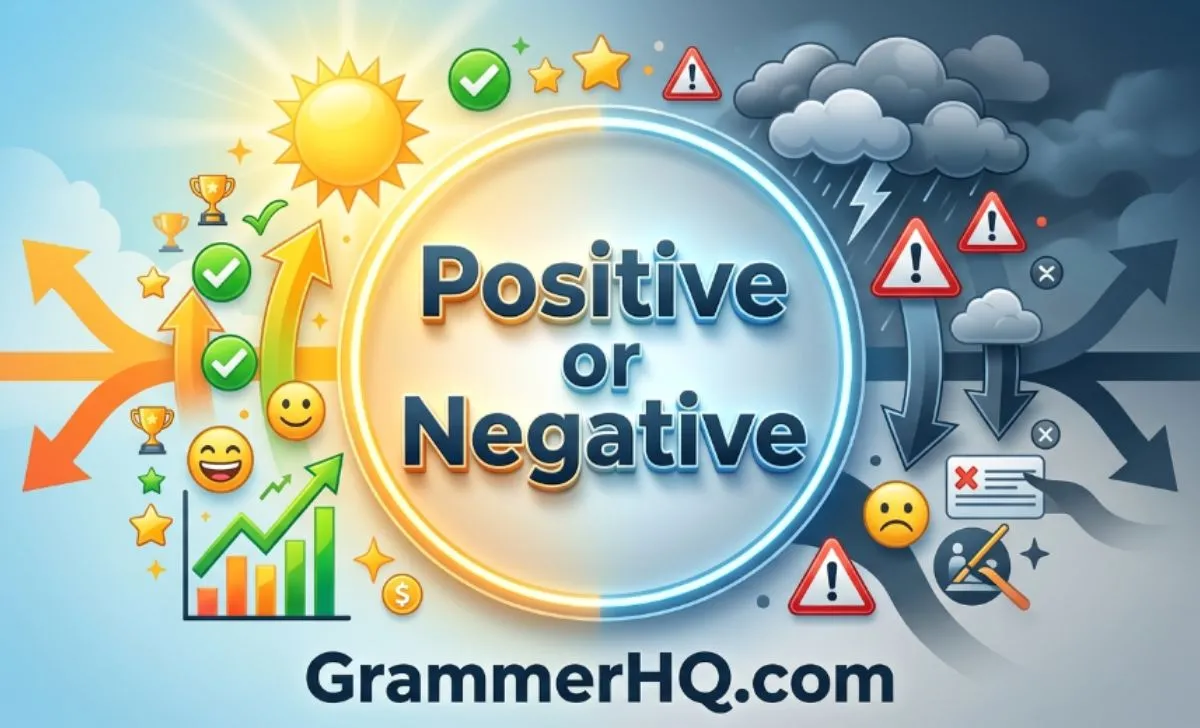
People often search “positive or negative” when they want to understand results, emotions, or decisions in a clear way.
This confusion happens because both words represent opposite meanings but are used in many contexts like psychology, medical reports, feedback, and even AI sentiment analysis.
In simple terms, “positive” means good or favorable, while “negative” means bad or unfavorable.
This article explains both concepts in a very easy way so you can use them correctly in writing, studies, and everyday communication without confusion.
Quick Answer
“Positive” and “negative” are opposite terms used to describe results, emotions, or outcomes.
- Positive
- Negative
In simple terms:
- Positive = good result or mindset
- Negative = bad result or mindset
Correct Example
The test result is positive, meaning the condition is detected.
Incorrect Example
The positive result means everything is bad.
What Does Positive or Negative Mean?
The phrase “positive or negative” is used to describe two opposite conditions in different situations like emotions, decisions, and scientific results.
Common Meanings
- Emotional state (happy or sad mindset)
- Test results (medical outcomes)
- Feedback (good or bad response)
- Decisions (beneficial or harmful choice)
Simple Usage Examples
- The feedback was positive and helpful.
- The result came back negative for infection.
- She has a positive attitude in life.
- He gave negative comments about the plan.
The Origin of Positive or Negative
Word History
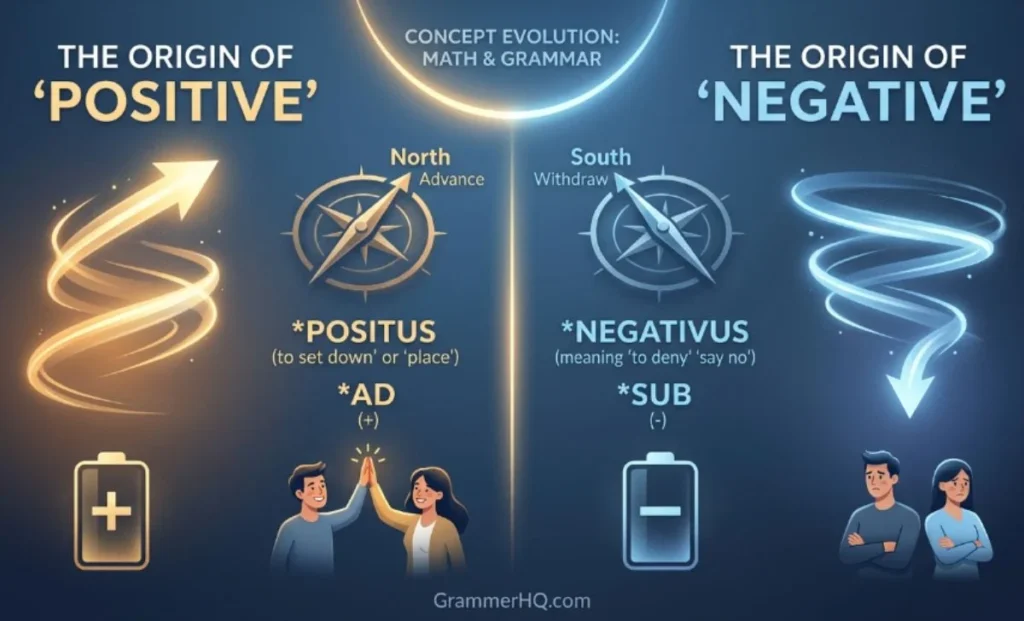
The word “positive” comes from Latin positivus, meaning something certain or definite. The word “negative” comes from Latin negativus, meaning denial or refusal.
Why the Confusion Happens
Confusion happens because both words:
- Are used in many fields (science, psychology, language)
- Have different meanings depending on context
- Represent opposite interpretations
British English vs American English

The terms “positive” and “negative” are used the same in both British and American English without spelling differences.
Comparison Table
| Term | Meaning (UK) | Meaning (US) |
| Positive | Good result | Good result |
| Negative | Bad result | Bad result |
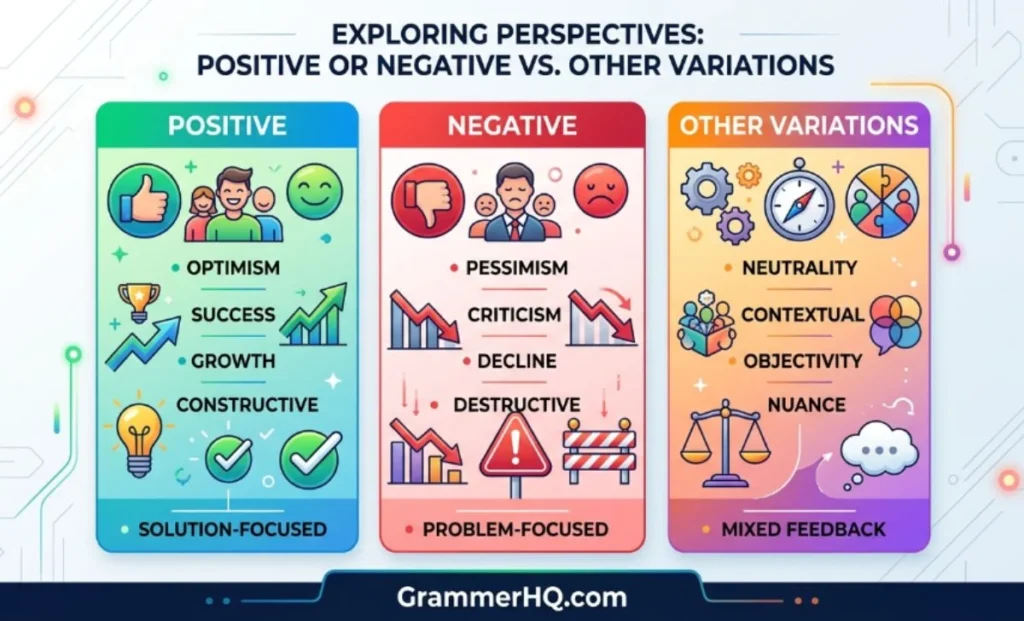
Positive or Negative vs Other Variations
Spelling Comparison Table
| Term | Usage Type | Context | Region |
| Positive | Outcome/Mindset | Psychology/Science | Global |
| Negative | Outcome/Mindset | Psychology/Science | Global |
| Positivity | Emotional trait | Psychology | Global |
| Negativity | Emotional trait | Psychology | Global |
Which Should You Use?
US Audience
Both terms are used widely in daily communication and medical reports.
UK Audience
Same usage as US English, no difference in meaning.
International Writing
Use both terms clearly depending on context.
Academic Writing
Use “positive” and “negative” for precise scientific or analytical meaning.
Social Media Usage
“Positive” is often used for motivational content, while “negative” is used for criticism or warnings.
Common Mistakes with Positive or Negative
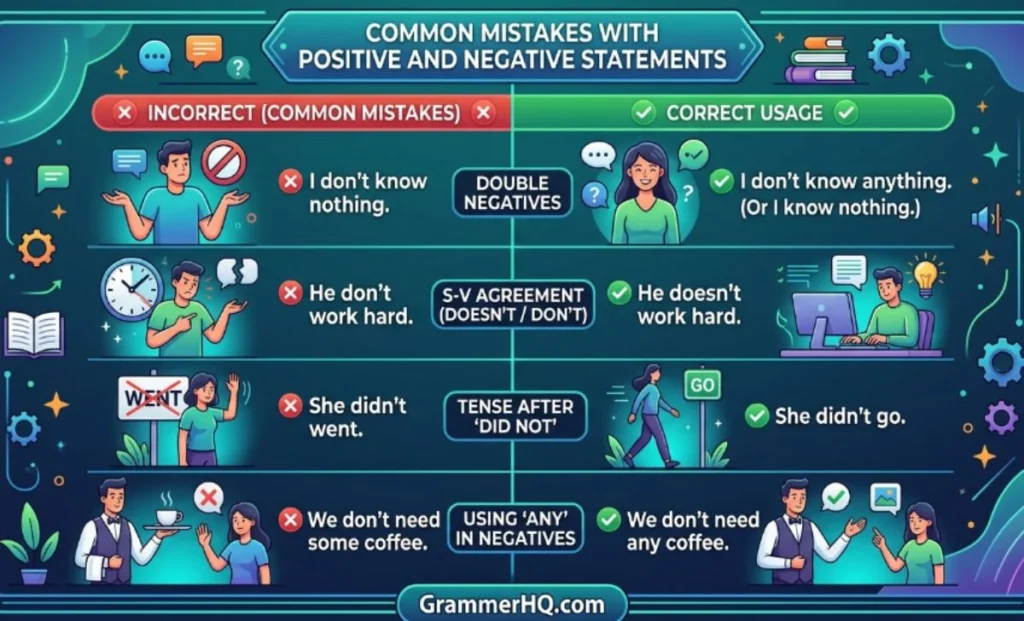
Frequent Errors
- Mixing emotional and scientific meaning
- Misunderstanding test results
- Using words without context
Corrected Examples
- Incorrect: Positive means something always good.
- Correct: Positive depends on context (medical, emotional, or analytical).
Positive or Negative in Everyday Examples
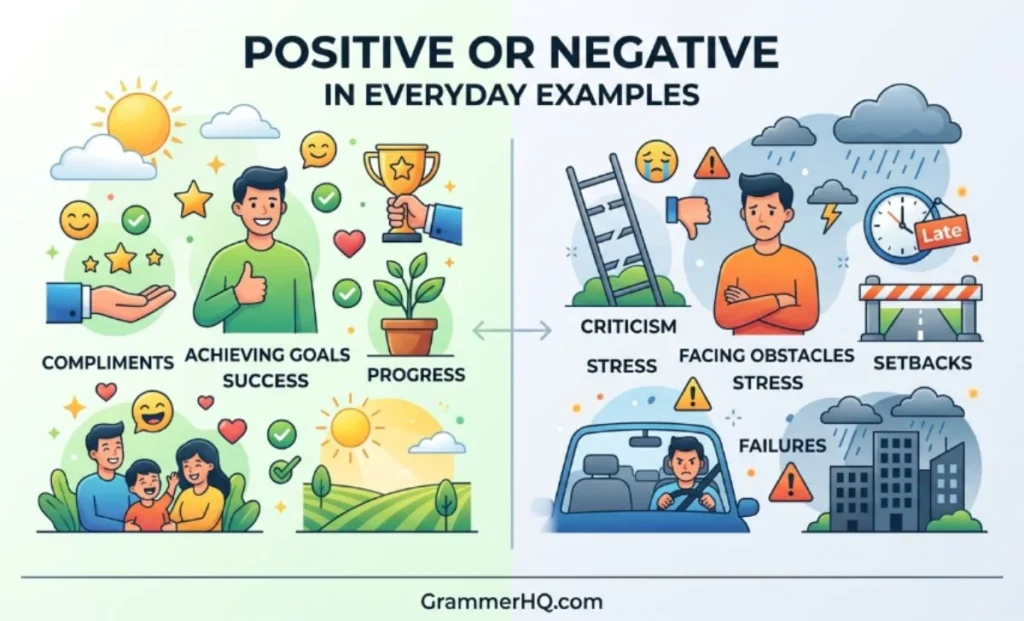
Emails
The report shows a positive trend in performance.
Social Media
Stay positive even in negative situations.
News Writing
The economy showed both positive and negative signals.
School Writing
Students learn about positive and negative numbers in math.
Business Writing
Customer feedback includes both positive and negative reviews.
Google Trends & Usage Data
Popular Countries
- United States: widely used in health and psychology
- United Kingdom: same usage pattern
- Canada: common in education and healthcare
- Australia: frequent in media reports
- India: widely used in studies and exams
Why People Search This Keyword
- Understanding medical test results
- Learning psychology terms
- Studying school subjects
- Improving English vocabulary
- AI sentiment analysis understanding
Related Grammar Rules
Similar Spelling Mistakes
- Good vs Bad
- Right vs Wrong
- Yes vs No
Helpful Grammar Tips
- Always use context when interpreting meaning
- Avoid assuming emotional meaning in science terms
- Learn usage differences in fields
FAQs
What does positive or negative mean?
It describes opposite outcomes, such as good or bad results.
Is positive always good?
Not always; in medical tests, it can mean detection of a condition.
What is a negative result?
It means absence of something in tests or analysis.
Can emotions be positive or negative?
Yes, they describe mental or emotional states.
What is positive thinking?
It is a mindset focused on optimism.
What is negative thinking?
It is a mindset focused on pessimism or fear.
Conclusion
Positive and negative are opposite terms used in many areas like science, psychology, and daily communication.
Positive generally refers to good or favorable outcomes, while negative refers to bad or unfavorable results. However, their meaning depends on context, especially in medical and analytical fields.
Understanding both terms clearly helps improve communication, learning, and writing accuracy. Always use them carefully based on situation and meaning to avoid confusion.
Read More Blogs:
- Buffalo or Bison? The One Difference Most People Never Notice
- Is It Tying or Tieing? The Correct Spelling Explained Simply