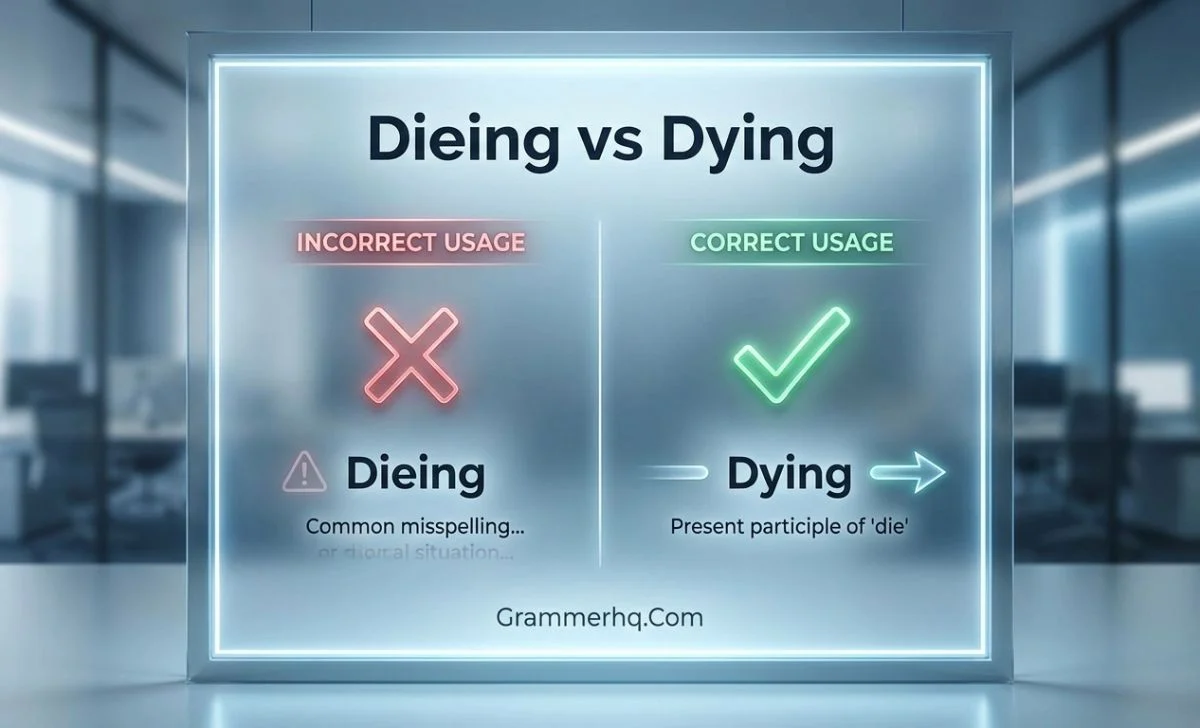
Dieing vs dying is a common spelling confusion, but the correct choice is simple: dying is the standard spelling when referring to death, decline, or something coming to an end.
The confusion comes from the way die changes when we add -ing. Instead of writing dieing, we change the final ie to y, giving us dying.
There is one more word worth knowing: dyeing, which means adding colour to something. Understanding these two spelling patterns will help you avoid a common mistake in everyday writing.
Quick Answer: Dieing vs Dying
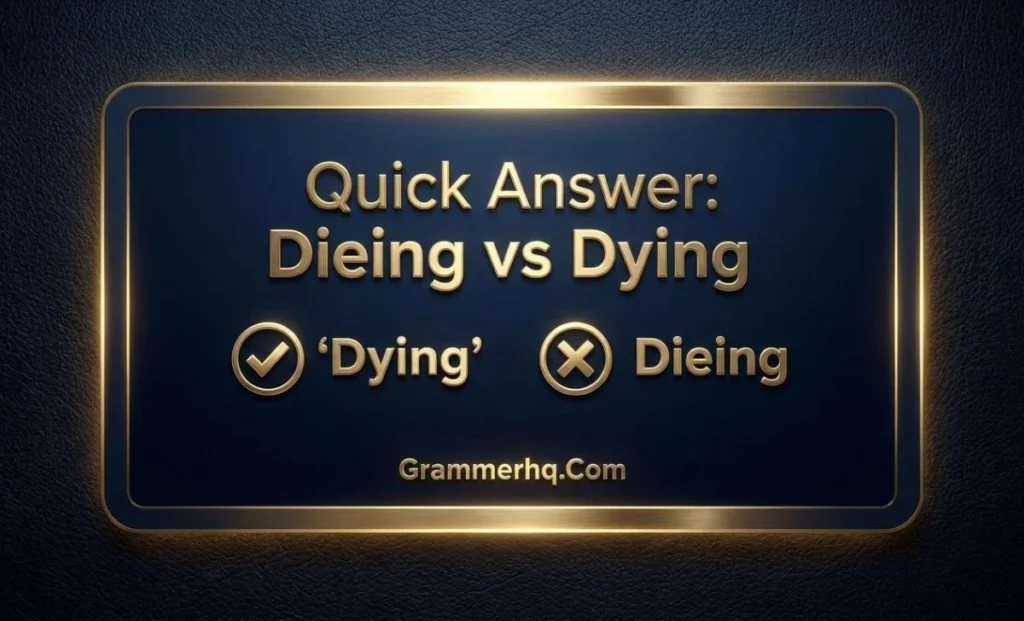
Dying is correct; dieing is not the standard spelling of the verb die. For example, write “The flowers are dying because they have not received enough water.”
The spelling rule changes ie to y before adding -ing. Meanwhile, dyeing is a separate word that describes colouring fabric, hair, or another material.
What Is the Difference Between Dieing vs Dying?
The main difference is standard spelling. Dying is the correct present participle of die, while dieing is generally a misspelling when the intended meaning involves death or decline.
The verb die can describe a person or animal approaching the end of life. It can also describe something losing its strength, stopping gradually, or disappearing over time.
Consider these examples:
- A plant: The rose bush is dying because the soil has become too dry.
- A phone: My phone battery is dying, so I need to find a charger.
- A tradition: The old tradition is dying out as fewer families continue it.
- An informal expression: I’m dying to know who won the competition.
Each sentence uses dying correctly, even though the meaning changes with the context.
What Does Dying Mean?
Dying is the present participle of die. It can describe the process of approaching death, a gradual decline, or an ending.
For instance, “The patient is dying” refers to a person’s life approaching its end. In contrast, “The fire is dying down” means that the fire is gradually becoming weaker.
The expression “I’m dying to see the results” is informal and emphasizes strong excitement or curiosity. It is not meant literally.
Is Dieing Ever Correct?
In ordinary English, dieing is not the standard spelling when talking about death, a decline, or something ending. In these contexts, use dying.
You may encounter dieing in discussions of specialized manufacturing terminology, where a die is a tool used to cut or shape material. However, this technical context is separate from the everyday verb die. For normal writing, choose dying when you mean approaching death or gradually coming to an end.
Why Is Dying Spelled With a Y?
English has a spelling rule for verbs ending in -ie: change ie to y before adding -ing.
That is why die becomes dying, rather than dieing. The same pattern appears in several other familiar verbs.
| Base verb | Correct -ing form | Example |
|---|---|---|
| Die | Dying | The plant is dying. |
| Lie | Lying | The cat is lying on the sofa. |
| Tie | Tying | He is tying his shoelaces. |
| Vie | Vying | Several teams are vying for the title. |
This pattern is easy to remember: die becomes dying, lie becomes lying, and tie becomes tying.
It also helps explain why dyeing is spelled differently. The verb dye does not end in -ie, so it follows a different spelling pattern.
Dying vs Dyeing: What’s the Difference?
Although dying and dyeing look similar and may sound alike, they have different meanings. One comes from die, while the other comes from dye.
| Word | Base verb | Meaning | Example |
|---|---|---|---|
| Dying | Die | Approaching death or gradually ending | The tree is dying. |
| Dieing | Die | Nonstandard spelling in ordinary English | “The tree is dieing” is incorrect. |
| Dyeing | Dye | Adding colour to something | She is dyeing her shirt blue. |
The difference becomes clear when you look at the base verb:
- Die → dying: The flowers are dying in the summer heat.
- Dye → dyeing: The artist is dyeing the fabric a deep red.
Remember this simple tip: dying relates to die; dyeing relates to colour.
Examples of Dying in Sentences
Here are six examples showing how dying is used in everyday English.
- The young plant is dying because it has not received enough sunlight.
- My laptop battery is dying, so I need to save my work.
- The farmer worked hard to protect the dying crops during the drought.
- The village’s traditional festival is slowly dying out.
- Before his death, he wrote a dying wish for his family.
- I’m dying to find out what happens in the final episode.
These sentences cover literal death, gradual decline, and figurative or informal expressions. In each case, dying is the correct spelling.
What Are the Different Forms of Die?
Knowing the main forms of die can help you choose the right word when writing about the past, present, or an ongoing process.
| Verb form | Correct spelling | Example |
|---|---|---|
| Base form | Die | Plants can die without water. |
| Third-person singular | Dies | The flower dies without enough water. |
| Past tense | Died | The plant died last winter. |
| Past participle | Died | Several plants have died this year. |
| Present participle | Dying | The remaining plant is dying. |
Pay particular attention to died and dying. Use died for a completed event in the past, as in “The tree died last winter.” Use dying for an ongoing process, as in “The tree is dying.”
Is Dying Spelled the Same in American and British English?
Yes. Dying is the standard spelling in both American and British English. Unlike words such as color/colour or traveling/travelling, this spelling does not change between the two varieties.
For example, an American writer and a British writer would both write, “The flowers are dying because of the heat.”
You can therefore use dying confidently whether you are writing for readers in the United States or the United Kingdom.
FAQs
Is it dying or dieing?
Dying is correct when referring to death, decline, or something coming to an end. Dieing is not the standard spelling of the verb die in everyday English.
Why does die become dying?
The verb die ends in -ie. Before adding -ing, the ie changes to y, producing dying. The same rule applies to lie → lying and tie → tying.
Is dyeing the same as dying?
No. Dying comes from die and refers to death or decline. Dyeing comes from dye and means adding colour to a material, such as fabric or hair.
What is the past tense of die?
The past tense is died. For example, “The tree died during the drought.” The present participle is dying, as in “The tree is dying.”
Is dying correct in both American and British English?
Yes. Dying is the standard spelling in both varieties of English, so you do not need to change it for a US or UK audience.
Conclusion
When choosing between dieing and dying, use dying for the standard form of die. The spelling rule changes ie to y before adding -ing, just as lie becomes lying and tie becomes tying.
Keep dyeing separate because it means colouring something. Once you remember the difference between die and dye, choosing the correct spelling becomes straightforward.
Read More Blogs
- Scotch vs Whiskey: The Real Difference Explained?
- Die vs Dice: What’s the Difference? Meaning, Rules & Examples