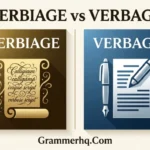
Verbiage vs verbage can be confusing because the two spellings look and sound very similar. The standard spelling is verbiage, while verbage is generally considered a nonstandard form.
Verbiage can refer to excessive or complicated language, but it can also mean the wording used to express an idea.
If you are writing an email, essay, report, website, or other professional content, verbiage is the spelling to use.
Quick Answer
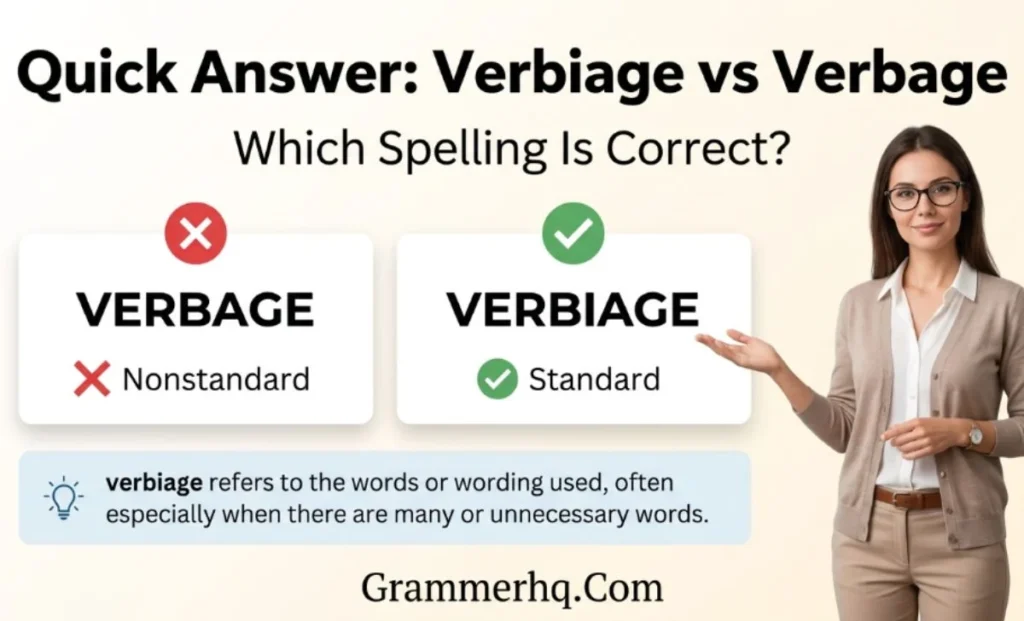
Verbiage is the standard spelling.
Verbage is commonly used when people mean verbiage, but it is generally treated as a nonstandard variant and is best avoided in formal or professional writing.
| Word | Standard in current edited English? | Meaning |
|---|---|---|
| Verbiage | Yes | Wording, expression, or excessive/complicated language |
| Verbage | Generally no | Nonstandard form usually intended to mean verbiage |
Examples
Correct:
The contract contains confusing legal verbiage.
Not recommended in formal writing:
The contract contains confusing legal verbage.
The key spelling to remember is verbiage, with “bi” in the middle.
What Does “Verbiage” Mean?
Verbiage is a noun with more than one related meaning.
It can describe too many words, especially when the language is complicated, unnecessary, or difficult to understand. Cambridge gives this as its main learner-dictionary meaning.
For example:
The instructions were buried under technical verbiage.
Here, verbiage suggests that the language is more complicated than it needs to be.
However, verbiage does not always have a negative meaning. In American English, it can also mean the wording, diction, or style of expression used in a document or message. Collins records both senses.
For example:
We need to change the verbiage on the website.
In this sentence, verbiage simply means the wording on the website. It does not necessarily mean the wording is excessive or bad.
Why Do People Confuse “Verbiage” and “Verbage”?
The confusion is understandable because verbiage can sound like it should be spelled verbage.
The beginning also resembles the familiar word verb, which may make the shorter spelling look logical.
But English spelling does not always follow the way a word appears to be constructed. The established spelling is verbiage.
Pronunciation can add to the confusion as well. Cambridge gives the US pronunciation as /ˈvɝː.bi.ɪdʒ/ and the UK pronunciation as /ˈvɜː.bi.ɪdʒ/.
A simple way to remember it is:
verbiage = ver + bi + age
Keep the i after the b.
Is “Verbage” a Word?
Verbage does appear in English usage, but that does not make it the standard spelling for modern formal writing.
Many current English-learning and reference sources describe verbage as a nonstandard form or misspelling of verbiage. Scribbr, for example, notes that it is sometimes used with a meaning similar to verbiage but is generally not regarded as a standard dictionary word.
So if you encounter verbage online, the safest interpretation is that the writer intended verbiage.
For professional, academic, business, and published writing, choose:
Verbiage ✅
rather than:
Verbage ❌
Verbiage Examples in Sentences
Here are examples showing both major uses of verbiage.
When it means excessive or complicated language
The legal verbiage made the agreement difficult to understand.
The editor removed unnecessary verbiage from the report.
The instructions contain too much technical verbiage.
The speech was filled with complicated verbiage.
When it simply means wording
Please review the verbiage before we publish the announcement.
The company changed the verbiage on its website.
We need clearer verbiage for the new policy.
The designer asked the client to approve the final verbiage.
The context determines whether verbiage sounds critical or neutral.
Verbiage vs Verbage: The Main Difference
The difference is mainly standard spelling and usage, not two separate meanings.
Verbiage is the established English word. It can refer to excessive language or, in some contexts, simply the wording or manner of expression.
Verbage is a nonstandard form that people sometimes use when they mean verbiage.
So there is no useful modern distinction such as:
- verbiage = one type of wording
- verbage = another type of wording
That is not how the two forms are normally distinguished in current edited English.
American English vs British English
Verbiage is used in both American and British English, but its meaning and tone can vary slightly by context.
Cambridge labels it formal and disapproving, focusing on complicated language containing unnecessary words.
Collins records a broader American English use in which verbiage can also mean the wording or style of expression. Its British English entry lists that neutral “diction; wording” sense as rare.
So, especially in American business and workplace writing, you may see sentences such as:
We should update the verbiage on the form.
Here, verbiage simply means wording.
When Should You Use “Verbiage”?
Use verbiage when you are talking about:
- wording in a document
- the language used in a contract
- formal or technical language
- the style of expression
- complicated or unnecessary wording
- language that contains too many words
For example:
The lawyer explained the legal verbiage in the contract.
Please simplify the verbiage on the application form.
The editor cut unnecessary verbiage from the article.
If you want a simpler word, wording, phrasing, or language may sometimes be clearer.
Common Mistake: “Verbage”
A common spelling mistake is:
The report contains too much verbage.
The standard form is:
The report contains too much verbiage.
The same correction applies when the intended meaning is simply “wording”:
Please change the verbiage on the webpage.
Not:
Please change the verbage on the webpage.
Easy Memory Trick
Remember:
Verbiage has “bi.”
Think:
ver-BI-age
That small i is the part people often leave out when writing verbage.
If you are unsure, remember the simple rule:
Use verbiage in standard edited English.
FAQs
Which is correct, verbiage or verbage?
Verbiage is the standard spelling. Verbage is generally treated as a nonstandard form and should be avoided in formal or carefully edited writing.
Does verbiage mean too many words?
It can. Verbiage commonly refers to excessive, complicated, or unnecessary language. It can also mean the wording or style of expression, particularly in American English.
Is verbage a misspelling?
In current standard edited English, verbage is generally treated as a nonstandard spelling of verbiage. Use verbiage in professional, academic, and formal writing.
Is verbiage singular or plural?
Verbiage is normally an uncountable noun, so we usually say:
The document contains too much verbiage.
Not:
The document contains many verbiages.
How do you pronounce verbiage?
In US English, Cambridge gives the pronunciation as /ˈvɝː.bi.ɪdʒ/. In UK English, it is /ˈvɜː.bi.ɪdʒ/.
What is a simple synonym for verbiage?
Depending on the context, useful alternatives include wording, phrasing, language, wordiness, verbosity, and excessive wording. The best synonym depends on whether you mean neutral wording or unnecessarily complicated language.
Conclusion
When choosing between verbiage vs verbage, use verbiage. It is the established standard spelling and can describe either excessive or complicated language or, in some contexts, the wording used to express something.
Verbage is commonly encountered, but it is generally considered nonstandard in current edited English. For essays, business communication, websites, reports, and other polished writing, keep the i:
Verbiage ✅
Verbage ❌
Read More Blogs

Hi, I’m Amelia Parker, a grammar enthusiast and writer at GrammarHQ.com. I specialize in explaining spelling differences, confusing words, and common English mistakes through simple, practical, and easy-to-understand guides.