Have you ever paused while writing an email or text and wondered whether you should write OK or okay? You are not alone.
Millions of English learners and native speakers search for this question because both forms appear everywhere. You may see OK in business emails, while okay often appears in books and online articles.
The confusion exists because both spellings are correct. However, they are not always used in the same way. The choice often depends on style, audience, and writing context.
This guide explains the difference between OK and okay, their pronunciation, history, usage in British and American English, and which form you should choose in formal and informal writing.
Quick Answer
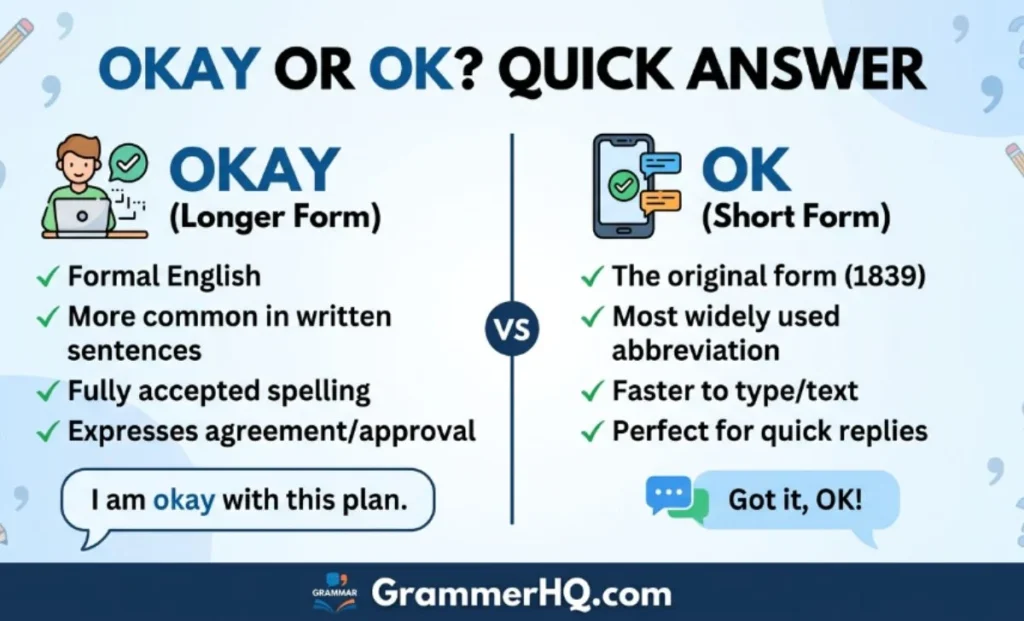
Both OK and okay are correct.
- OK is the shorter and more common form.
- Okay is the fully spelled-out version.
Examples:
✅ The meeting is OK for Friday.
✅ Is it okay if I arrive late?
In most situations, you can use either spelling. However, many writers prefer okay in formal writing because it looks more polished.
| Form | Meaning | Example |
|---|---|---|
| OK | Correct, acceptable, satisfactory | The report looks OK. |
| Okay | Same meaning as OK | The report looks okay. |
Pronunciation of Okay or OK
Both words have exactly the same pronunciation.
Pronunciation: /oʊˈkeɪ/
It sounds like:
oh-KAY
Examples:
- Are you okay?
- Is everything OK?
There is no pronunciation difference between the two spellings. This often surprises learners because they expect different pronunciations.
In spoken English, people usually say:
- “Okay, let’s begin.”
- “OK, I understand.”
Listeners cannot tell which spelling you intend because both sound identical.
Why People Confuse Okay or OK

Several reasons cause confusion.
1. Both Spellings Are Correct
Unlike many spelling questions, there is no wrong choice here. Dictionaries accept both forms.
2. They Sound the Same
Since both words share identical pronunciation, speakers rarely think about spelling until they write.
3. Different Style Guides Prefer Different Forms
Some editors prefer OK, while others choose okay for consistency and readability.
4. Frequent Use in Digital Communication
Text messages, emails, and social media often favor shorter forms like OK, which influences everyday writing habits.
5. Historical Uncertainty
The unusual history of the word has created multiple accepted spellings over time.
Easy Trick to Remember Okay or OK
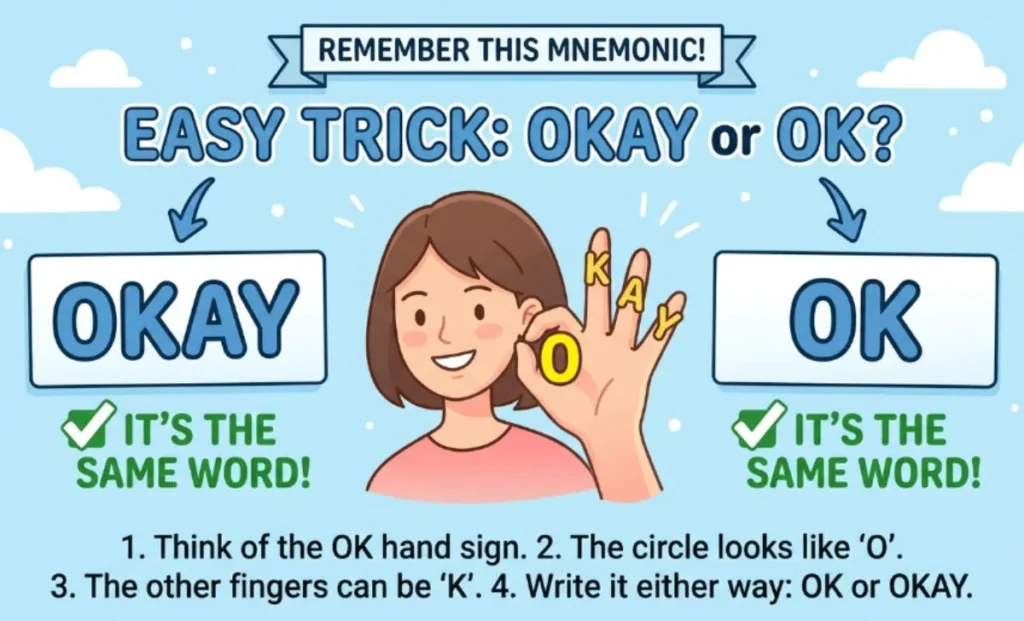
Use this simple memory trick:
“Short message? Use OK. Formal writing? Use okay.”
Examples:
- Text message: OK, see you soon.
- Blog article: Everything is okay now.
Another easy rule:
If you can spell it out comfortably, choose “okay.”
This trick will help you stay consistent in your writing.
The Origin of Okay or OK
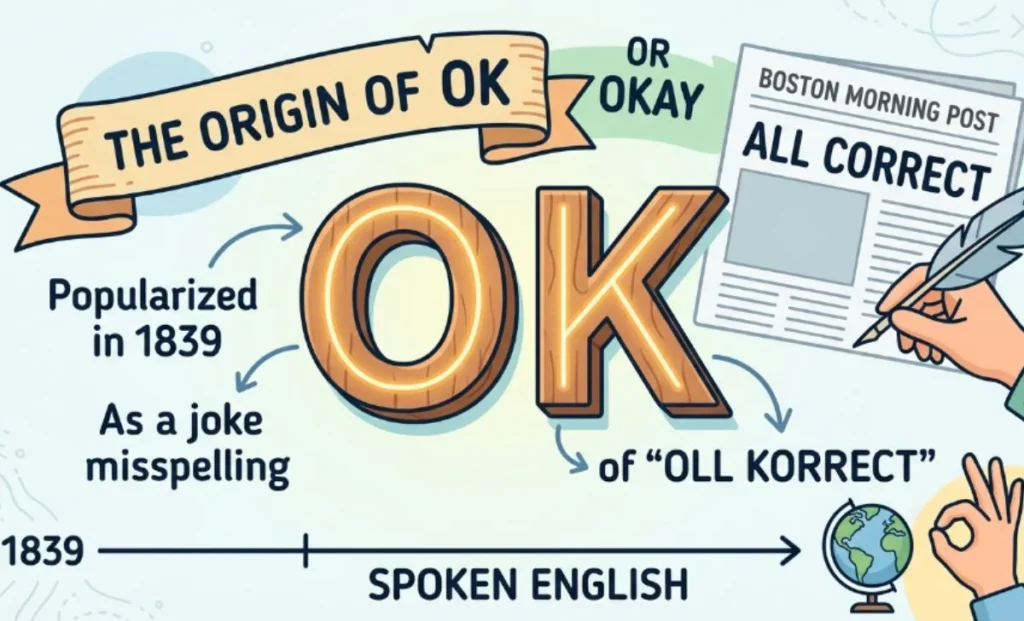
The word OK has one of the most fascinating histories in English.
Most language historians believe OK originated in the United States during the early nineteenth century.
In the 1830s, Americans enjoyed creating humorous abbreviations with intentional misspellings.
One popular joke abbreviation was:
“Oll Korrect”
This playful spelling represented “all correct.”
The abbreviation became O.K.
Soon afterward, political campaigns helped popularize the expression across America.
Over time, people began writing the word in different forms:
- O.K.
- OK
- okay
Today, dictionaries such as Merriam-Webster, Oxford, and Cambridge recognize both OK and okay as standard English.
British English vs American English Spelling
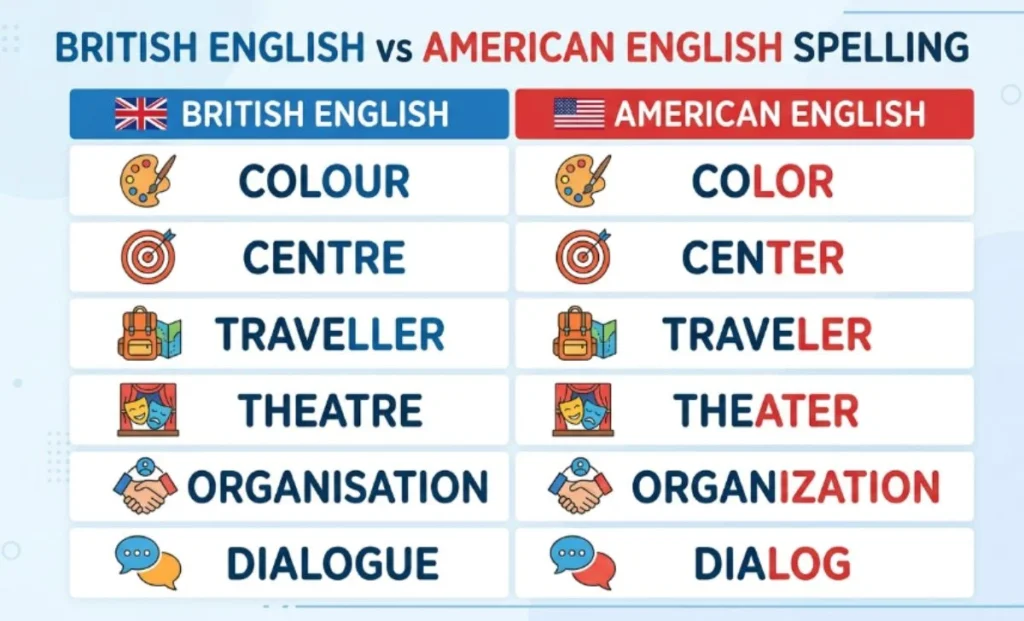
Both British and American English accept OK and okay.
However, preferences sometimes differ.
American writers often use OK in newspapers, business writing, and everyday communication.
British writers also use OK, although some publications favor okay in more formal contexts.
Comparison Table
| Feature | American English | British English |
|---|---|---|
| Preferred short form | OK | OK |
| Formal writing preference | okay or OK | okay or OK |
| Everyday communication | OK | OK |
| Text messages | OK | OK |
| Academic style | Often okay | Often okay |
Examples:
American English:
- The proposal is OK.
British English:
- The proposal is okay.
Both sentences are correct.
Which Spelling Should You Use?
Your audience should guide your choice.
Use OK When:
- Writing text messages.
- Sending quick emails.
- Chatting on social media.
- Taking notes.
- Writing informal content.
Examples:
- OK, thanks.
- Are you OK?
Use Okay When:
- Writing blog posts.
- Producing academic work.
- Preparing reports.
- Creating formal documents.
Examples:
- The results were okay overall.
- It is okay to ask questions.
Global Audience Advice
If your audience includes readers from multiple countries, either spelling works.
The most important rule is consistency.
Choose one style and use it throughout the document.
Common Mistakes with Okay or OK
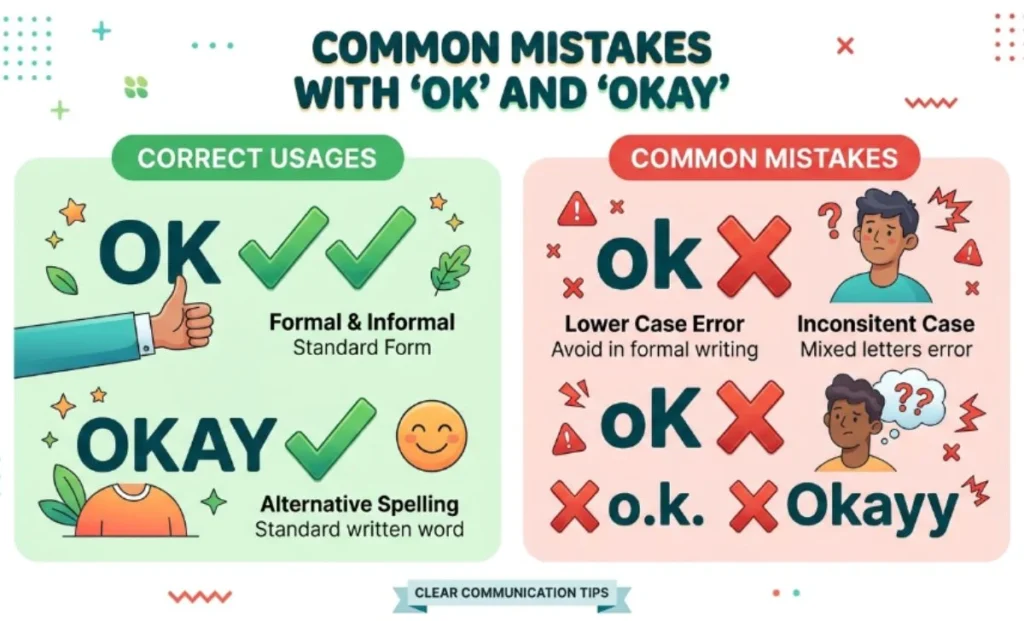
Writers often make unnecessary mistakes when using these terms.
| Incorrect | Correct |
|---|---|
| Okey | OK or okay |
| Ok | OK |
| o.k | OK |
| Okayy | okay |
| ok in formal report | okay |
Mistake 1: Writing “Okey”
❌ Okey, let’s go.
✅ OK, let’s go.
Mistake 2: Mixing Styles
❌ The report is okay. Everything looks OK. The conclusion seems okay. The summary is OK.
Although not technically wrong, switching repeatedly may look inconsistent.
Choose one style.
Mistake 3: Using Lowercase “ok” in Formal Writing
Informal texts often use “ok.”
Formal writing usually prefers:
✅ OK
or
✅ okay
Okay or OK in Everyday Examples
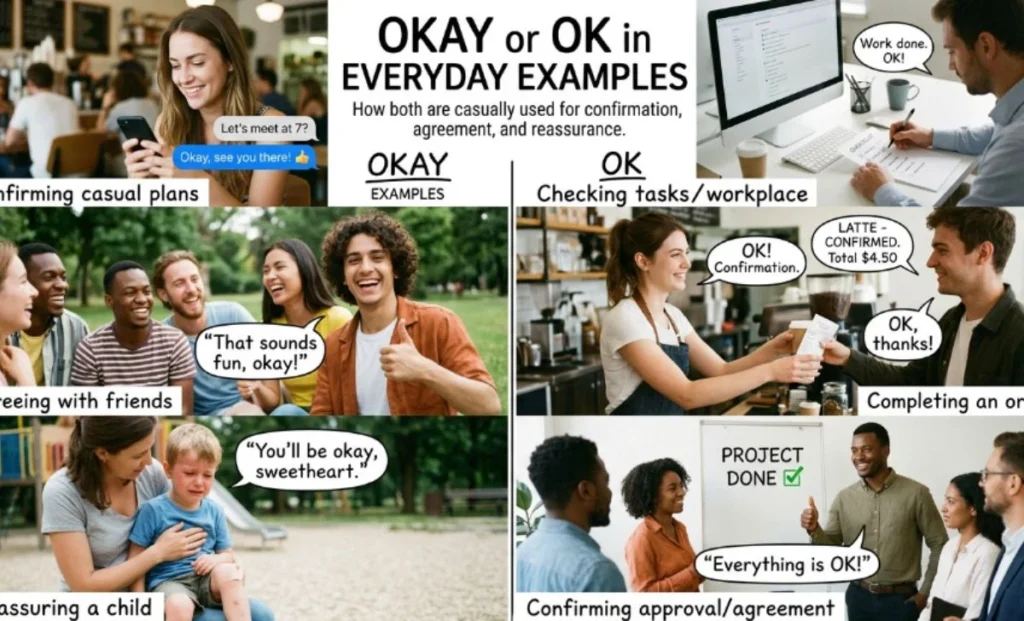
Here are examples from daily life.
Emails
Formal email:
“Your application is okay for submission.”
Informal email:
“OK, I will send the files tomorrow.”
Business Communication
“The manager said the budget is OK.”
“It is okay to revise the proposal.”
Social Media
“OK everyone, new video drops tonight.”
“It’s okay to make mistakes.”
News Writing
“Officials confirmed that all passengers were OK.”
“Experts say the economy remains okay despite challenges.”
Academic Writing
“It is generally okay to cite multiple sources.”
Many academic editors prefer the spelled-out form.
Okay or OK in Formal Writing
Formal writing often favors okay because it appears more polished.
Examples include:
- Academic papers
- Professional reports
- Website content
- Articles
- Research documents
Some style guides permit OK, especially in quotations or direct speech.
Examples:
Formal:
“The data remained okay throughout the experiment.”
Informal:
“Everything was OK after the update.”
Always follow your organization’s style guide when available.
Okay or OK – Google Trends & Usage Data
Search trends show interesting patterns.
United States
Searches for OK vs okay remain consistently popular because writers want to know which spelling sounds more professional.
United Kingdom
British users also frequently search this topic, especially students and business professionals.
Australia and Canada
Both countries commonly use both spellings.
Digital Communication
Short forms like OK dominate text messaging, instant messaging, and workplace chat platforms.
Publishing and Content Writing
Writers and editors often prefer okay because it looks smoother within long-form content.
Overall, both spellings remain highly popular worldwide.
Comparison Table: Okay vs OK
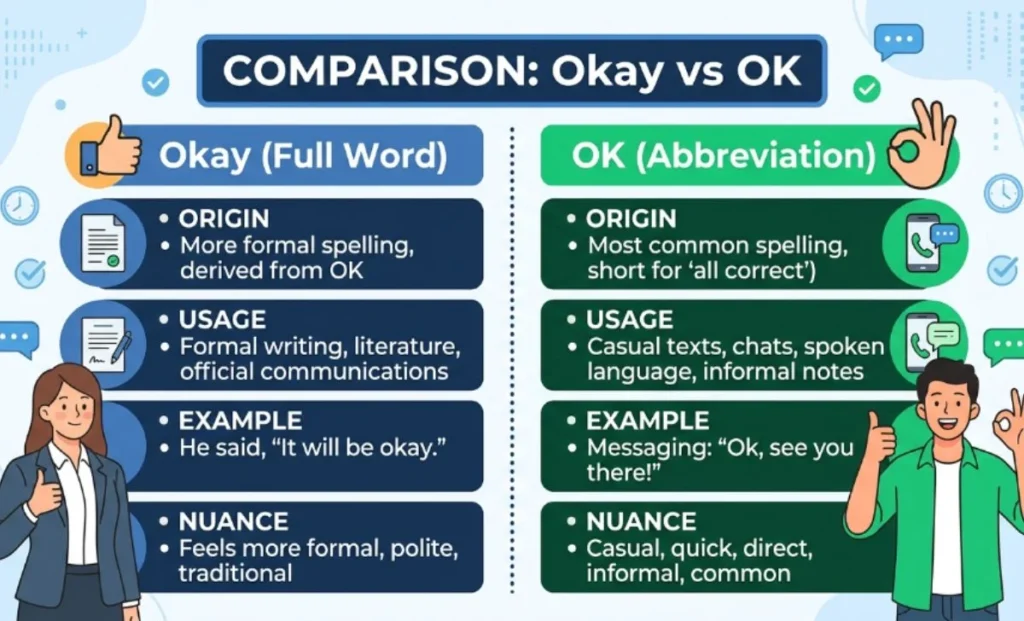
| Feature | OK | okay |
|---|---|---|
| Meaning | Acceptable, satisfactory | Acceptable, satisfactory |
| Formality | Slightly informal | Slightly more formal |
| Length | Short | Full spelling |
| Common in texts | Yes | Less common |
| Common in articles | Yes | Very common |
| Accepted by dictionaries | Yes | Yes |
FAQs
Is OK grammatically correct?
Yes. OK is fully correct and accepted by major dictionaries.
Is okay more formal than OK?
Many writers consider okay slightly more formal, although both forms are acceptable.
Should I use OK in academic writing?
Many teachers and editors prefer okay in academic writing.
Is “Ok” correct?
Most style guides recommend writing OK with capital letters instead of Ok.
Which spelling is more common?
OK is generally more common in everyday communication.
Can I use OK in business emails?
Yes. However, okay may appear more professional in formal business communication.
Do British and American English use different spellings?
No. Both varieties accept both spellings.
Conclusion
The debate between OK and okay is simpler than many people think. Both spellings are correct, widely accepted, and understood across the English-speaking world.
The real difference lies in style and audience rather than grammar.Use OK for quick messages, casual conversations, and informal communication.
Choose okay when writing blog posts, academic papers, reports, or other formal documents. Most importantly, remain consistent throughout your writing.
If you write for an international audience, either option will work. Readers around the world recognize both forms immediately.
By understanding context, audience, and tone, you can confidently choose the spelling that best suits your purpose.
Read More Blogs:
- Sung or Sang: What’s the Difference and Which One Is Correct?
- Sneaked or Snuck: Which Word Is Correct in English Grammar?