Choosing between gray and grey can be confusing because both spellings are correct. The only real difference is the region where they are used.
Gray is the preferred spelling in American English, while grey is the standard spelling in British English and most other English-speaking countries. Since both words refer to the same color, many writers are unsure which one to use.
In this guide, you’ll learn the correct spelling, pronunciation, why the confusion exists, simple memory tricks, and practical examples. By the end, you’ll know exactly when to use gray or grey with confidence.
Quick Answer
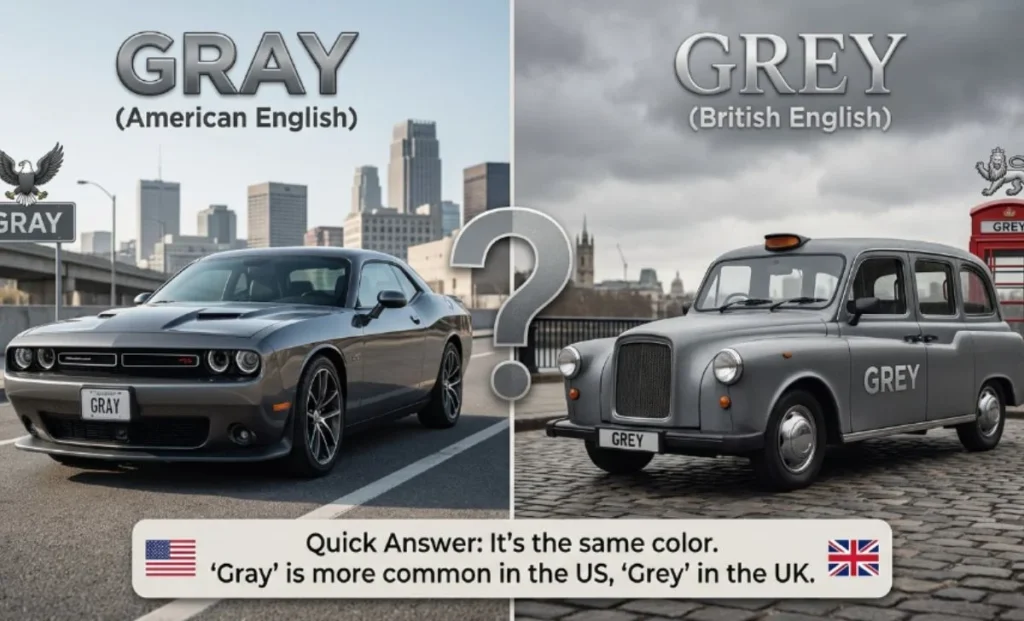
Gray and grey mean the same color. The difference is only the preferred spelling in different varieties of English.
- Gray is the standard spelling in American English.
- Grey is the standard spelling in British English, Canadian English, Australian English, and most other Commonwealth countries.
- Neither spelling is more correct than the other. Choose the one that matches your audience.
Examples
- The sky turned gray before the storm. (American English)
- The sky turned grey before the storm. (British English)
- She wore a gray sweater to work. (US)
- He bought a grey suit for the wedding. (UK)
Quick Tip: Use gray for readers in the United States and grey for readers in the United Kingdom and most Commonwealth countries.
Pronunciation of Gray or Grey
Both gray and grey have exactly the same pronunciation. The spelling changes, but the spoken word does not.
Pronunciation: /ɡreɪ/
It sounds like:
- gray
- day
- play
- say
Whether someone writes gray or grey, you will hear the same pronunciation in everyday conversation. Native English speakers do not pronounce the words differently.
Spoken Examples
- “I like your gray jacket.”
- “The weather looks grey today.”
In speech, no one can tell which spelling you are using because both sound identical.
Why People Confuse Gray or Grey
People often confuse gray and grey because they represent the same color and are pronounced the same way. The only difference is regional spelling.
Here are the main reasons for the confusion:
Same Meaning
Both words describe the color between black and white. Their meaning never changes.
Identical Pronunciation
Since both spellings sound exactly alike, people cannot distinguish them in spoken English.
Different English Standards
American English prefers gray, while British English prefers grey. Readers who see both spellings online may assume one is incorrect, even though both are accepted.
Global Internet Content
Websites, books, social media posts, and videos are created by people from different countries. As a result, both spellings appear regularly, making it harder for learners to know which one to choose.
Spell Check Differences
Writing software often follows the language setting you choose. A US English spell checker suggests gray, while a UK English spell checker recommends grey.
Easy Trick to Remember Gray or Grey
A simple memory trick can help you remember which spelling to use.
- Gray has the letter A, just like America.
- Grey has the letter E, just like England.
Memory Trick
- A = America = Gray
- E = England = Grey
This easy rule works in most situations and helps you choose the correct spelling based on your audience.
The Origin of Gray or Grey
The words gray and grey come from the same Old English word, grǣg, which described the color between black and white. Over time, English spelling changed as the language spread across different countries.
When American English became more standardized, many spellings were simplified or made more consistent. As a result, gray became the preferred spelling in the United States. Meanwhile, grey remained the standard spelling in the United Kingdom and most Commonwealth countries.
Although the spellings are different, the meaning has never changed. Both words refer to the same color and are equally correct when used for the right audience.
British English vs American English Spelling
The biggest difference between gray and grey is the version of English you are writing.
- Gray is the preferred spelling in American English.
- Grey is the preferred spelling in British English.
- Australia, New Zealand, and most Commonwealth countries also use grey.
- Both spellings are accepted worldwide, but consistency is important within a document.
Comparison Table
| Feature | Gray | Grey |
|---|---|---|
| Meaning | Color between black and white | Color between black and white |
| American English | ✅ Preferred | Rare |
| British English | Less common | ✅ Preferred |
| Australian English | Less common | ✅ Preferred |
| Canadian English | Sometimes used | ✅ More common |
| Pronunciation | /ɡreɪ/ | /ɡreɪ/ |
| Meaning Difference | None | None |
Example Sentences
| American English | British English |
|---|---|
| The walls are gray. | The walls are grey. |
| I bought a gray coat. | I bought a grey coat. |
| The cat has gray fur. | The cat has grey fur. |
Gray or Grey in Proper Names
Some well-known names keep a specific spelling regardless of regional English. These spellings are part of the official name and should not be changed.
Earl Grey Tea
The correct name is Earl Grey tea, named after Charles Grey, the 2nd Earl Grey. Even in American English, the tea is still written as Earl Grey, not Earl Gray.
Fifty Shades of Grey
The official title of the bestselling novel and film is Fifty Shades of Grey. The spelling remains Grey in all countries because it is part of the original title.
Gray’s Anatomy
The American television series is officially titled Gray’s Anatomy. The spelling Gray should not be changed to Grey, even in British English.
Which Spelling Should You Use?
The correct spelling depends on who will read your writing.
Use gray if your audience is mainly in:
- United States
- American businesses
- US schools and universities
- American publications
Use grey if your audience is mainly in:
- United Kingdom
- Australia
- Canada (most publications)
- New Zealand
- Ireland
- Other Commonwealth countries
If your readers come from many countries, either spelling is acceptable. The most important rule is to stay consistent. Avoid switching between gray and grey in the same article unless you are explaining the difference.
Common Mistakes with Gray or Grey
Many writers know both spellings are correct but still make avoidable mistakes.
Mistake 1: Mixing Both Spellings
❌ The car is gray, and the road is grey.
✅ The car is gray, and the road is gray. (US English)
✅ The car is grey, and the road is grey. (UK English)
Mistake 2: Thinking One Is Incorrect
❌ Only gray is correct.
✅ Both gray and grey are correct. The choice depends on regional English.
Mistake 3: Ignoring Your Audience
A British website should normally use grey, while an American website should usually use gray.
Mistake 4: Changing Spellings During Editing
Many spelling errors happen when several people edit the same document. Always proofread to make sure one spelling style is used throughout.
Gray or Grey in Everyday Examples
Here are examples showing how the word appears in different types of writing.
Emails
US Example
Please choose the gray background for the presentation.
UK Example
Please choose the grey background for the presentation.
News Writing
- Thick gray clouds covered the city before sunrise. (US publication)
- Thick grey clouds covered the city before sunrise. (UK publication)
Social Media
- Loving this gray hoodie today!
- My new grey sofa looks amazing.
Formal Writing
- The report used a gray color scale to highlight trends. (US)
- The report used a grey colour scale to highlight trends. (UK)
Everyday Conversation
- I painted my bedroom gray.
- She prefers grey furniture.
In every example, the meaning stays exactly the same. Only the regional spelling changes.
Gray or Grey – Google Trends & Usage Data
Interest in gray and grey remains steady throughout the year because people regularly search for spelling differences, writing guidance, and color terminology.
Where People Search This Keyword
Many users also search for questions about hair color, Earl Grey tea, Crayola spelling, and famous titles such as Fifty Shades of Grey. These searches usually relate to regional spelling rather than differences in meaning.
Users commonly search for:
- Which spelling is correct?
- Gray vs Grey difference
- American vs British spelling
- Gray or Grey pronunciation
- Which spelling should I use?
- Is gray wrong in the UK?
- Is grey wrong in the US?
Comparison Table: Gray vs Grey
| Feature | Gray | Grey |
|---|---|---|
| Meaning | Color between black and white | Color between black and white |
| Correct Spelling | ✅ Yes | ✅ Yes |
| American English | ✅ Standard | Accepted but uncommon |
| British English | Accepted but uncommon | ✅ Standard |
| Pronunciation | Same | Same |
| Origin | Same word | Same word |
| Best For | US audience | UK & Commonwealth audience |
FAQs
Is gray or grey correct?
Both spellings are correct. Gray is the preferred spelling in American English, while grey is the standard spelling in British English and most Commonwealth countries.
Why do Americans write gray instead of grey?
American English follows the spelling gray as its standard form. It became the preferred spelling as American English developed its own spelling conventions.
Is grey wrong in the United States?
No. Americans will understand grey, but gray is the spelling most commonly used in the United States.
Is gray wrong in the United Kingdom?
No. British readers recognize gray, but grey is the preferred spelling in British English and is considered the standard choice.
Do gray and grey have different meanings?
No. Both words refer to the same color between black and white. The only difference is regional spelling.
Which spelling should I use in professional writing?
Choose the spelling that matches your audience. Use gray for American readers and grey for readers in the UK, Australia, Canada, New Zealand, and other Commonwealth countries. Once you choose one spelling, use it consistently throughout your document.
Is hair color gray or grey?
Both gray hair and grey hair are correct. The spelling depends on the variety of English you use rather than the meaning. American English prefers gray hair, while British English and most Commonwealth countries prefer grey hair. Both expressions describe hair that has naturally lost its pigment with age.
Is grey or gray more common?
Globally, grey is slightly more common because it is used in the United Kingdom and many Commonwealth countries. However, gray is the standard spelling in American English and is far more common in the United States. The better choice depends on the audience you are writing for.
How does Crayola spell gray or grey?
Crayola uses the spelling gray because it follows American English spelling conventions. If you are referring to the Crayola color name, gray is the correct spelling.
Is it gray or grey in the Philippines?
Both spellings are understood in the Philippines because American and British English both influence education and media. In most cases, either spelling is acceptable, but it is best to use one spelling consistently throughout your writing.
Conclusion
Choosing between gray and grey is easier than it first appears. Both spellings are correct, and both describe the same color. The only real difference is the variety of English you are using.
If you write for an American audience, use gray. If your readers are in the United Kingdom or most Commonwealth countries, use grey.
There is no difference in pronunciation or meaning, so you do not need to worry about using the “wrong” word. The most important rule is to stay consistent throughout your writing.
By understanding your audience and following regional spelling conventions, you can write more clearly, professionally, and confidently in any situation.
Read More Blogs:
- Barbeque or Barbecue: Which Spelling Is Correct?
- What Is the Difference Between Email and Gmail?
- Successful or Succesful: Which Spelling Is Correct?
- Crier or Cryer : Meaning Explained Simply and Clearly