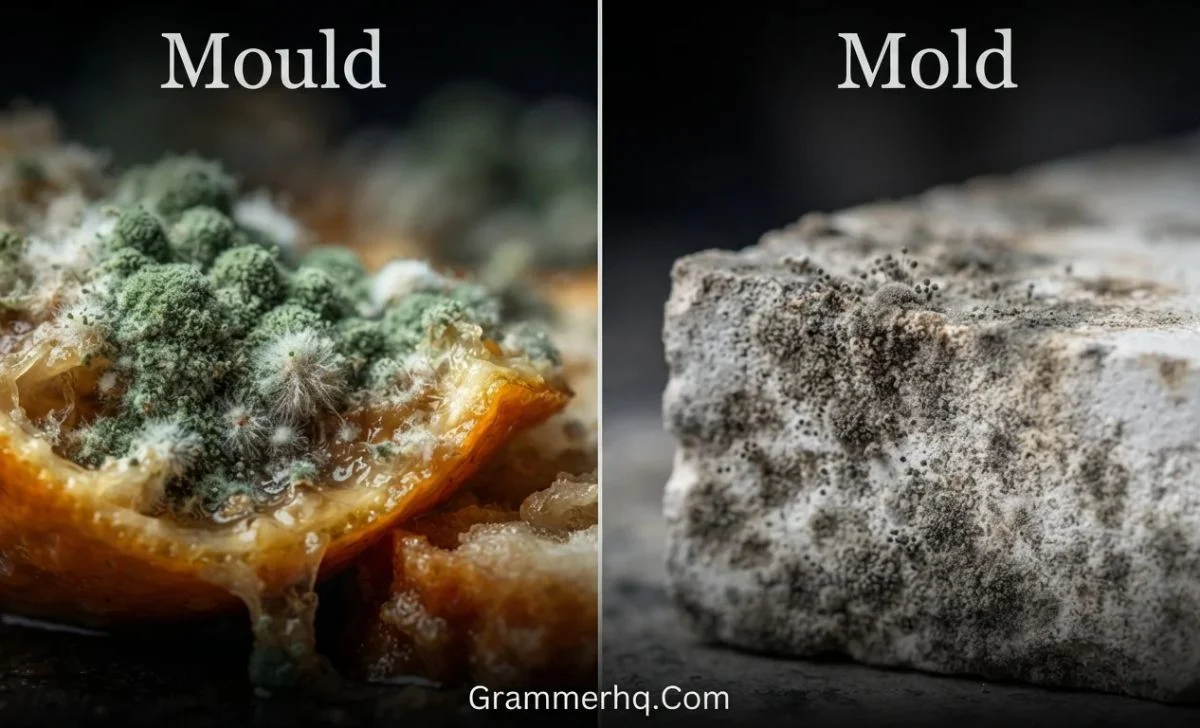
Mould vs Mold is a common spelling difference between British and American English. Both words are correct, and they generally have the same meanings.
Mould is the preferred spelling in British English, while mold is standard in American English. Both words can refer to a type of fungus, a container used to shape materials, or the act of shaping or influencing something.
The main difference is regional spelling, not meaning or pronunciation. If you are writing for readers in the United States, use mold. For readers in the United Kingdom, use mould.
Consistency matters when writing for an international audience, so choose the spelling that matches your readers and follow it throughout your article.
Quick Answer: Mould or Mold?
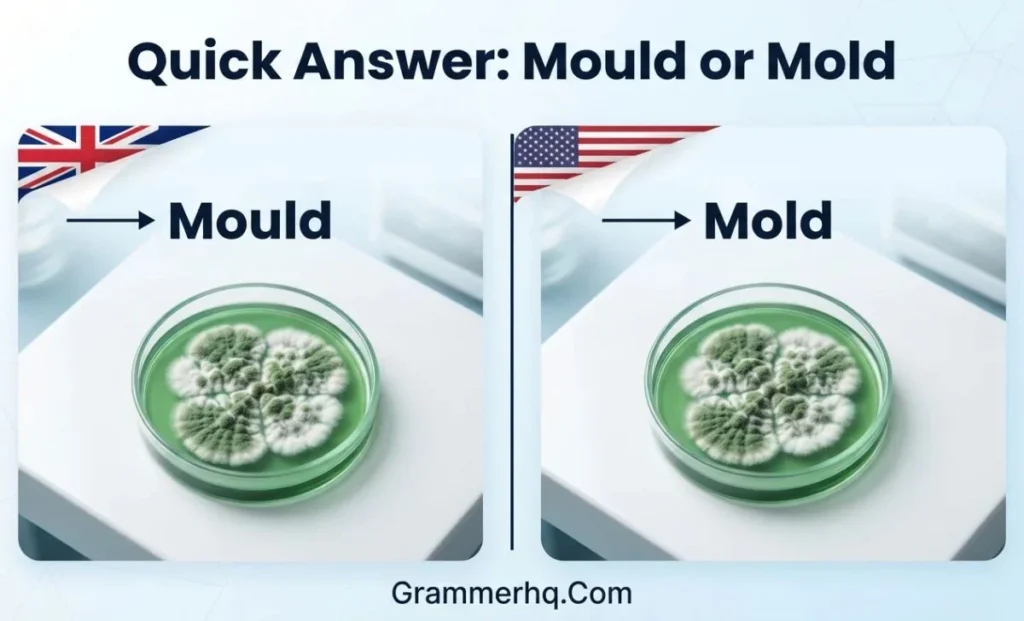
- Mould: The standard spelling in British English.
- Mold: The standard spelling in American English.
- Meaning: Both words can describe fungal growth, a shaping container, or the act of forming something.
- Pronunciation: Both are generally pronounced the same way.
- Which one should you use? Choose mold for American readers and mould for British readers.
Neither spelling is inherently incorrect. The right choice depends on your intended audience and the variety of English you are using.
What Does Mould Mean?
Mould is the British English spelling of a word with several meanings. It can refer to a fungus that grows in damp environments, a container used to give something a particular shape, or the process of shaping or influencing something.
As a noun, mould often describes fungal growth on food, walls, ceilings, or other surfaces. It can also mean a shaped container used in baking, manufacturing, and crafts.
As a verb, mould means to shape, form, or influence something. For example, a teacher can mould a student’s character through guidance and education.
Examples of mould in British English:
- The damp bathroom wall developed mould.
- She used a silicone mould to make chocolate shapes.
- Parents and teachers can mould a child’s character.
- The workers used a mould to shape the plastic parts.
- The bread became mouldy after several days.
In each example, mould follows standard British spelling conventions.
What Does Mold Mean?
Mold is the American English spelling of the same word. It has the same principal meanings as mould and can function as either a noun or a verb.
As a noun, mold can describe a fungus that grows in moist conditions or a container used to shape a material. As a verb, it can mean to form, shape, or influence something.
Examples of mold in American English:
- We found mold growing behind the kitchen cabinet.
- He poured the melted chocolate into a mold.
- Parents help mold their children’s values.
- The factory uses a mold to produce plastic components.
- The bread became moldy after being left uncovered.
These examples show how American English uses mold in everyday writing, household discussions, manufacturing, and figurative expressions.
Mould vs Mold: Key Differences
The two spellings differ mainly in their written form and regional preference. Their meanings, grammatical functions, and usual pronunciation are generally the same.
| Feature | Mould | Mold |
|---|---|---|
| Preferred variety | British English | American English |
| Fungus | Mould | Mold |
| Shaping container | Mould | Mold |
| Verb meaning to shape | Mould | Mold |
| Adjective | Mouldy | Moldy |
| Past tense | Moulded | Molded |
| -ing form | Moulding | Molding |
| Pronunciation | Generally the same | Generally the same |
For example, a British writer might say, “The mould on the wall needs attention.” An American writer would usually write, “The mold on the wall needs attention.”
Both sentences are correct. The spelling changes to match the regional convention, but the intended meaning remains the same.
Why Does British English Use Mould and American English Use Mold?
British and American English developed different spelling conventions over time. Some words retained the letter combination ou in British usage, while American English adopted shorter spellings in many cases.
The difference appears in several familiar word pairs, including colour and color, favour and favor, and labour and labor. The pair mould and mold follows a similar pattern.
American spelling conventions were influenced by efforts to simplify and standardize written English. British English retained many traditional spellings, although British spelling itself includes variations.
These differences do not mean that one form is more correct than the other. Both are established English spellings used in their respective varieties.
Mould vs Mold Examples in Sentences
When comparing mould vs mold, remember that the preferred spelling depends on whether you are following British or American English conventions.
| British English | American English |
|---|---|
| Mould is growing on the bathroom wall. | Mold is growing on the bathroom wall. |
| The baker bought a new cake mould. | The baker bought a new cake mold. |
| Damp conditions can encourage mould growth. | Damp conditions can encourage mold growth. |
| The designer moulded the clay by hand. | The designer molded the clay by hand. |
| This material is suitable for moulding. | This material is suitable for molding. |
| The bread has become mouldy. | The bread has become moldy. |
The meaning of each sentence stays essentially the same. Only the spelling changes to reflect the preferred English variety.
Moulded vs Molded, Moulding vs Molding
The spelling difference also applies to related forms of the word. Remembering these variations helps you avoid mixing British and American spellings in the same piece of writing.
Moulded vs molded: Both are past-tense and past-participle forms of the verb. British English generally uses moulded, while American English generally uses molded.
- British: The artist moulded the clay into a bowl.
- American: The artist molded the clay into a bowl.
Moulding vs molding: Both refer to the act or process of shaping something. The words can also describe decorative architectural features or manufactured components.
- British: The workshop specializes in plastic moulding.
- American: The workshop specializes in plastic molding.
Mouldy vs moldy: Both adjectives describe something affected by mould or mold.
- British: The mouldy bread was thrown away.
- American: The moldy bread was thrown away.
Mouldable vs moldable: Both describe a material that can be shaped. The preferred spelling follows the same British and American pattern.
- British: The material is soft and mouldable.
- American: The material is soft and moldable.
These forms are particularly useful when writing about baking, construction, plastics, crafts, or household maintenance.
Mould in Nature and Mold in Manufacturing
Although the spellings are regional alternatives, the word can describe different things depending on context.
Mould as a fungus
Mould is a type of fungus that can grow on food, damp walls, wood, and other materials when environmental conditions are suitable. Moisture, warmth, and available organic matter can encourage its growth.
Related terms include mould spores, fungal growth, indoor mould, black mould, mould prevention, and mould remediation. In American English, these are commonly written as mold spores, indoor mold, black mold, mold prevention, and mold remediation.
Mould and mildew are related terms, but they are not interchangeable in every scientific context. If you are writing about indoor air quality or water damage, use the terminology appropriate to the subject.
Mould as a shaping container
A mould can also be a container or form used to give a material a particular shape. This meaning appears in baking, casting, crafts, and industrial production.
Examples include silicone moulds, chocolate moulds, cake moulds, plastic moulds, and metal-casting moulds. In the United States, the corresponding forms are silicone molds, chocolate molds, cake molds, plastic molds, and metal-casting molds.
Injection moulding, called injection molding in American English, is a manufacturing process used to produce shaped plastic components. In this context, the word refers to a shaping process rather than fungal growth.
Common Mistakes to Avoid
Writers sometimes assume that one spelling is correct everywhere. This can lead to unnecessary corrections or inconsistent writing.
Avoid these common mistakes:
- Calling mould incorrect in American English: Mold is preferred in the United States, but mould is a recognized British spelling.
- Calling mold incorrect in British English: Mould is preferred in the United Kingdom, but the American form is still understandable.
- Mixing regional spellings: Avoid switching between mould, molded, and molding without a reason.
- Confusing the meanings: The word can describe a fungus, a shaping container, or the act of forming something. Context determines the intended meaning.
- Assuming the pronunciation changes: The two spellings are generally pronounced alike.
For professional writing, choose a regional style guide and apply it consistently. This is particularly helpful for websites, educational resources, business documents, and articles aimed at readers in different countries.
FAQs
Is mould or mold correct?
Both are correct. Mould is the preferred British English spelling, while mold is the preferred American English spelling.
Is mould British or American?
Mould is primarily the British English form. It is also used in other varieties of English that follow British spelling conventions.
Is mold American spelling?
Yes. Mold is the standard spelling in American English for the fungus, a shaping container, and the verb meaning to shape or influence.
Are mould and mold pronounced the same?
Yes. In standard usage, both spellings generally have the same pronunciation. The difference is mainly orthographic, meaning it concerns how the word is written.
Is mouldy or moldy correct?
Both are correct. British English generally uses mouldy, while American English uses moldy.
Is moulding or molding correct?
Both spellings are correct. Moulding is preferred in British English, while molding is standard in American English.
What is the plural of mould or mold?
The plurals are moulds and molds, respectively. Use the form that matches your chosen English variety.
Does mould always mean fungus?
No. It can refer to fungal growth, a container used to shape materials, or the process of shaping or influencing something.
Conclusion
The difference between mould and mold is primarily a matter of British and American spelling. British English generally uses mould, while American English uses mold.
Both words can refer to a fungus, a shaping container, or the act of forming something, and their pronunciation is generally the same.
When choosing between them, consider your audience and keep related forms consistent. Use mouldy, moulded, and moulding for British English, or moldy, molded, and molding for American English. Following this simple rule will help you write clearly and accurately for your readers.
Read More Blogs

Hi, I’m Amelia Parker, a grammar enthusiast and writer at GrammarHQ.com. I specialize in explaining spelling differences, confusing words, and common English mistakes through simple, practical, and easy-to-understand guides.