Program vs. Programme: What’s the Real Difference?

Both program vs. programme are correct English spellings, but their usage depends on the type of English you are writing. ...
Read more
Bearing vs Baring: What Is the Difference?

Bearing vs baring are two different English words that sound similar but have different meanings and uses. Bearing usually means ...
Read more
Accept vs. Except: What Is the Difference?
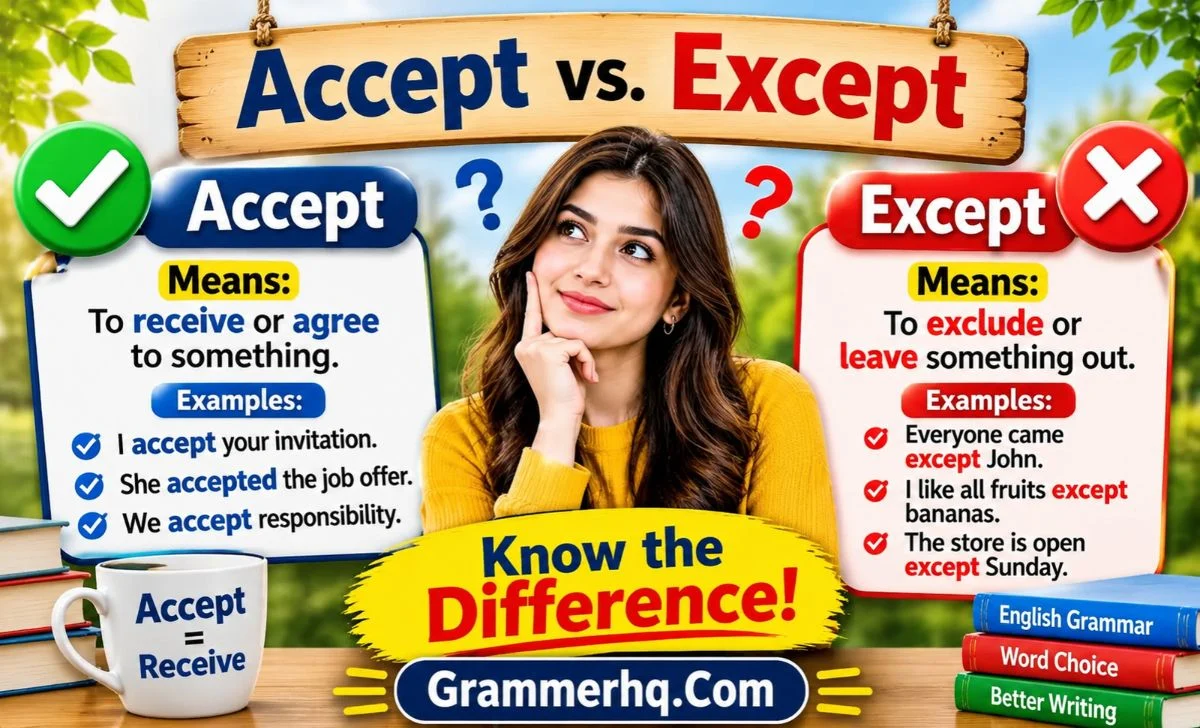
Accept vs. Except is a common English word confusion that can change the meaning of an entire sentence. Accept means ...
Read more
Homie vs. Homey: Meaning, Differences, and Correct Usage?

Homie vs. Homey can be confusing because both words sound almost identical, but they usually have different meanings and uses. ...
Read more
Inquiry vs. Enquiry: Meaning, Differences & US vs. UK Spelling?
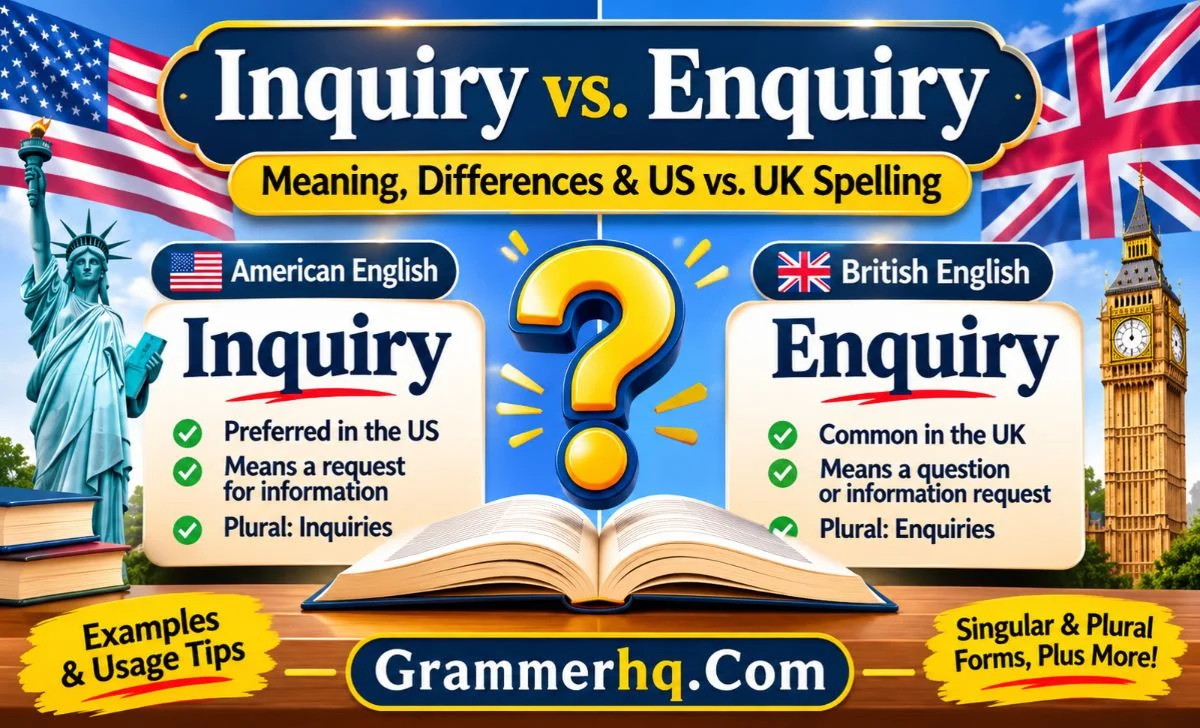
Inquiry vs. Enquiry:Both inquiry and enquiry are correct English spellings. However, they differ in regional preference. Inquiry is the standard ...
Read more
Disc or Disk: What’s the Difference? (Meaning & Usage Rules)
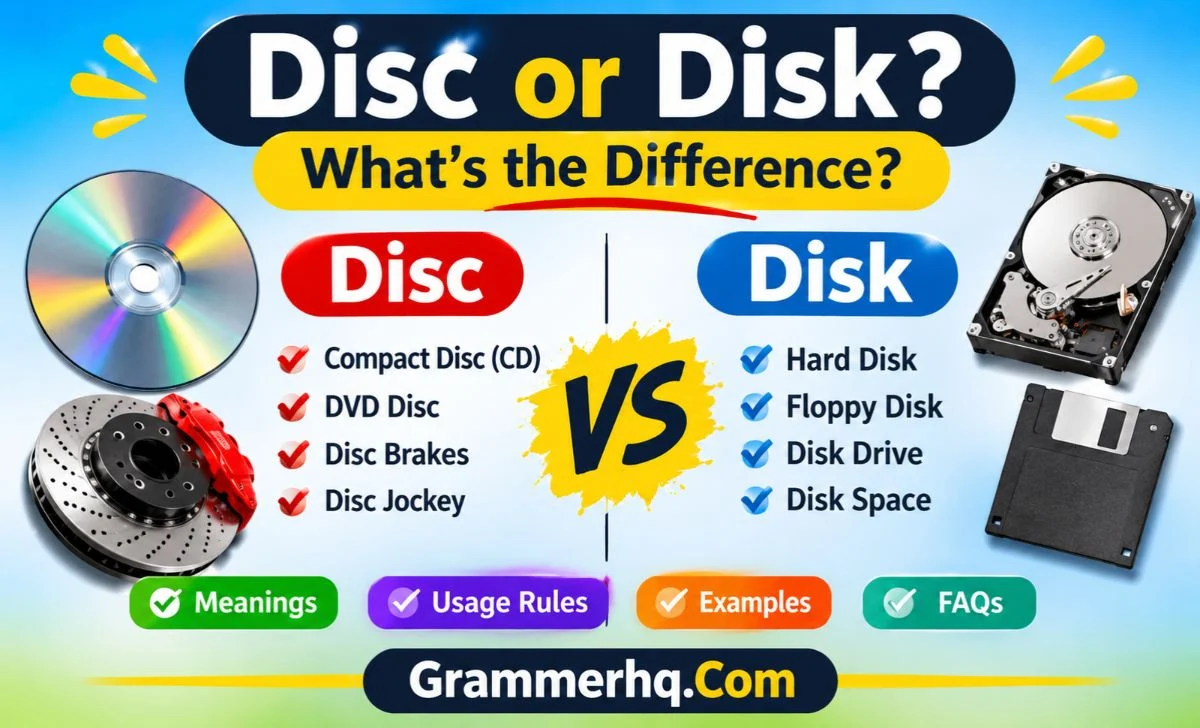
Both disc and disk are correct English spellings. They have the same pronunciation and generally refer to a thin, flat, ...
Read more
You Too or You To: What Is the Difference?

You Too or You To are both correct English expressions, but they have different meanings and grammatical uses. “You too” ...
Read more
Gage or Gauge: Meaning, Spelling, and Usage?
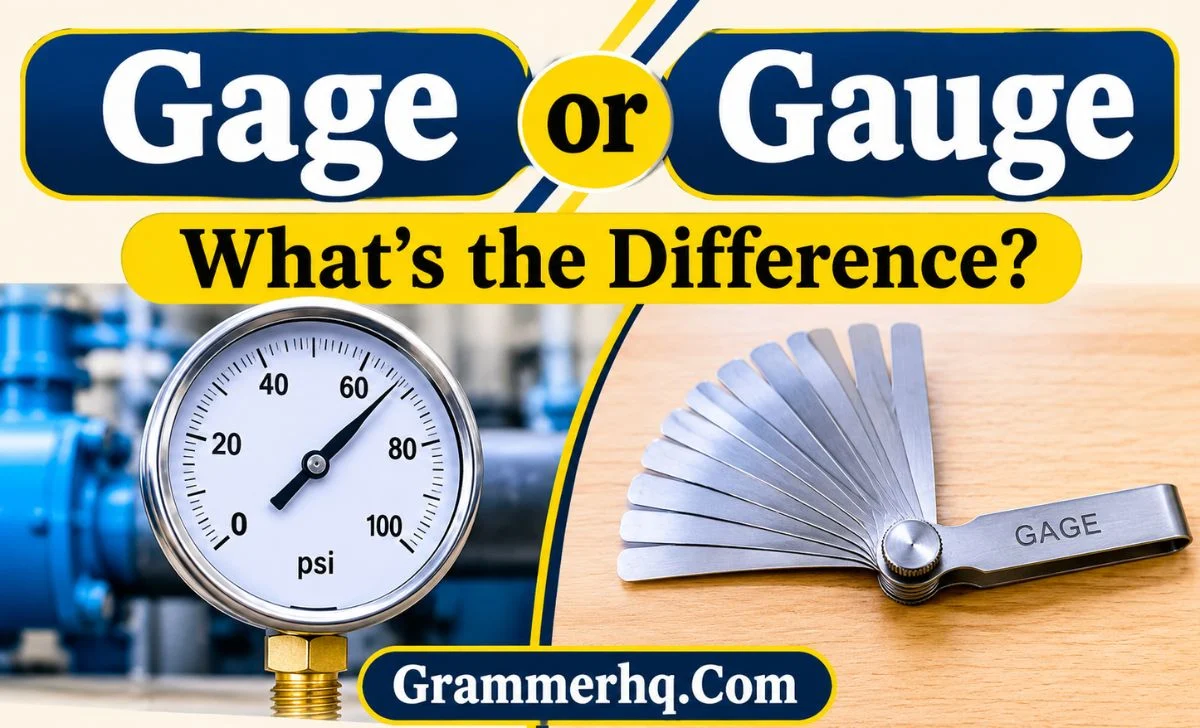
Gage or gauge—which spelling should you use? Gauge is the standard and preferred spelling in modern English, especially when referring ...
Read more
Recurring vs. Reoccurring: What Is the Difference?

Recurring vs. reoccurring are both correct English words. However, they have slightly different meanings. Recurring usually describes something that happens ...
Read more
Defence or Defense: Meaning and Usage Explained?
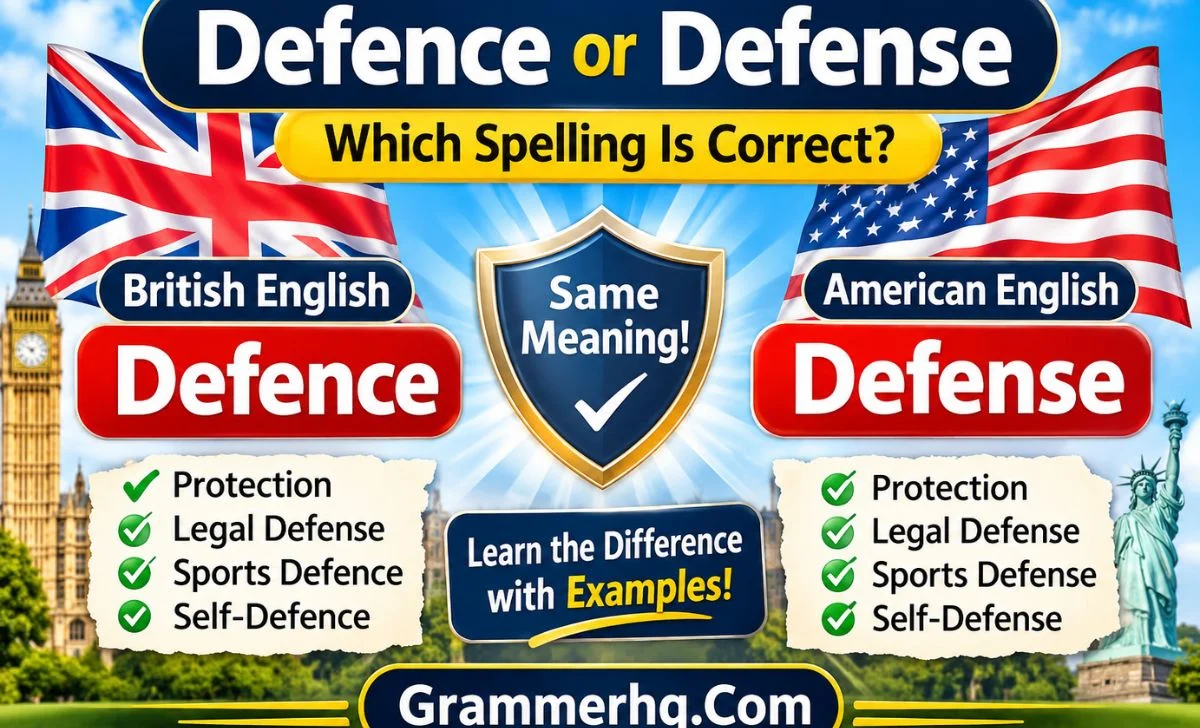
Both defence and defense are correct spellings of the same English word. The difference depends on regional spelling conventions. Defence ...
Read more