English learners often wonder whether they should write honor or honour. The two words look slightly different, yet they sound exactly the same and share the same meaning.
This often leads to confusion, especially among students, writers, and professionals who work with both American and British English.
So, which spelling is correct? The short answer is that both spellings are correct. The difference lies in the type of English you are using.
“Honor” is the preferred spelling in American English, whereas “honour” is used in British English and many Commonwealth countries.
In this guide, you’ll learn the meaning, differences, pronunciation, usage rules, examples, history, and common mistakes related to honor vs honour.
Quick Answer: Is It Honor or Honour?
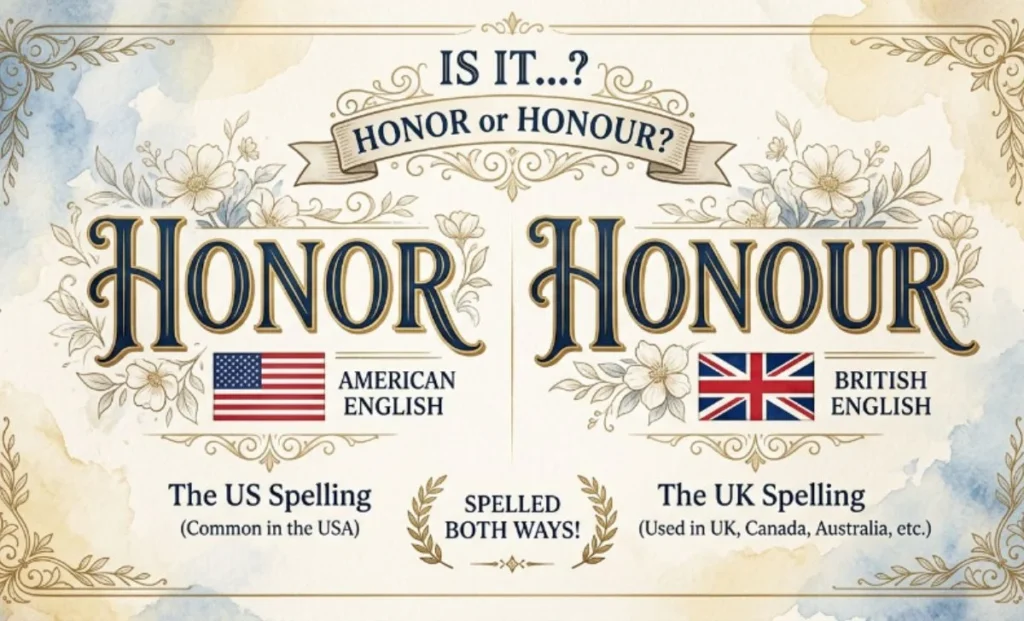
Both honor and honour are correct spellings.
- Honor is the American English spelling.
- Honour is the British English spelling.
Neither spelling is wrong. You should simply choose the version that matches your audience and use it consistently throughout your writing.
| Spelling | English Variety |
|---|---|
| Honor | American English |
| Honour | British English |
What Does “Honor” Mean?
The word honor refers to respect, integrity, recognition, or high moral principles. It can function as both a noun and a verb.
Honor as a Noun
As a noun, honor means respect, recognition, or a special award.
Examples:
- It was a great honor to receive the award.
- The soldier received the Medal of Honor.
- She graduated with high honors.
Honor as a Verb
As a verb, honor means to show respect, keep a promise, or recognize someone’s achievements.
Examples:
- We honor our veterans every year.
- The university honored the distinguished professor.
- Please honor your commitment.
What Does “Honour” Mean?
The meaning of honour is exactly the same as honor. The only difference is the spelling.
Honour as a Noun
Examples:
- It was an honour to speak at the ceremony.
- He received a national honour for his service.
- The students considered it an honour to participate.
Honour as a Verb
Examples:
- We should honour our traditions.
- The community honoured the local heroes.
- They promised to honour the agreement.
Honor vs Honour: What’s the Difference?
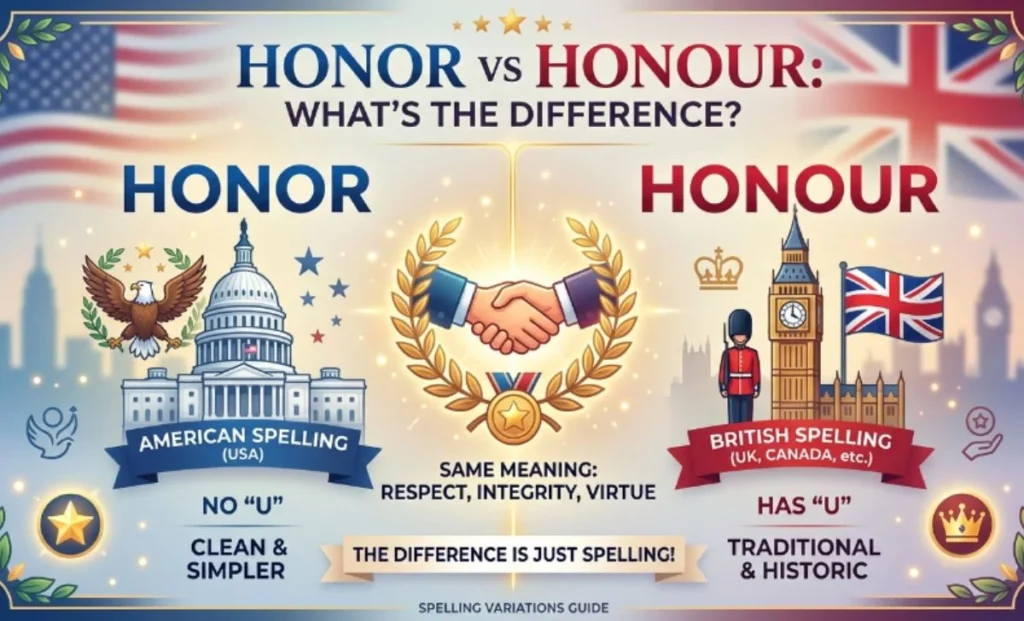
The difference between honor and honour is purely regional.
| Feature | Honor | Honour |
|---|---|---|
| Meaning | Respect or recognition | Respect or recognition |
| Pronunciation | Same | Same |
| Spelling Style | American English | British English |
| Common Regions | United States | UK, Canada, Australia, India, Pakistan |
The meaning and pronunciation remain identical regardless of spelling.
When Should You Use “Honor”?
Use honor when writing in American English.
Use “Honor” When:
- Writing for a U.S. audience.
- Attending an American university.
- Following American spelling conventions.
- Creating content for U.S.-based businesses.
Examples:
- It is an honor to serve this country.
- We honor our teachers every year.
- She received academic honors.
When Should You Use “Honour”?
Use honour when writing in British English.
Use “Honour” When:
- Writing for British readers.
- Preparing for IELTS or Cambridge exams.
- Studying in countries that follow British English.
- Following UK style guides.
Examples:
- It is an honour to represent our school.
- We must honour our commitments.
- The judge was addressed as “Your Honour.”
Pronunciation of Honor and Honour
One of the easiest things to remember is that honor and honour are pronounced exactly the same.
Pronunciation:
American English: /ˈɑː.nɚ/
British English: /ˈɒn.ər/
A simple pronunciation guide is:
ON-er
The extra letter “u” in honour does not affect pronunciation.
Origin and History of Honor and Honour
Both words trace their roots back to the Latin word honor, meaning dignity, esteem, or respect.
Later, the word entered English through Old French. British English eventually adopted the spelling honour, influenced by French spelling traditions.
In the early nineteenth century, American lexicographer Noah Webster promoted simplified spellings in American English. As a result, many words lost the letter “u.”
Examples include:
- colour → color
- favour → favor
- behaviour → behavior
- labour → labor
- honour → honor
This is why American English now uses honor.
Where Are Honor and Honour Used Around the World?

Different countries prefer different spellings.
| Country | Preferred Spelling |
|---|---|
| United States | Honor |
| United Kingdom | Honour |
| Canada | Honour |
| Australia | Honour |
| New Zealand | Honour |
| India | Honour |
| Pakistan | Honour |
Always consider your audience before choosing a spelling.
Different Forms of Honor and Honour
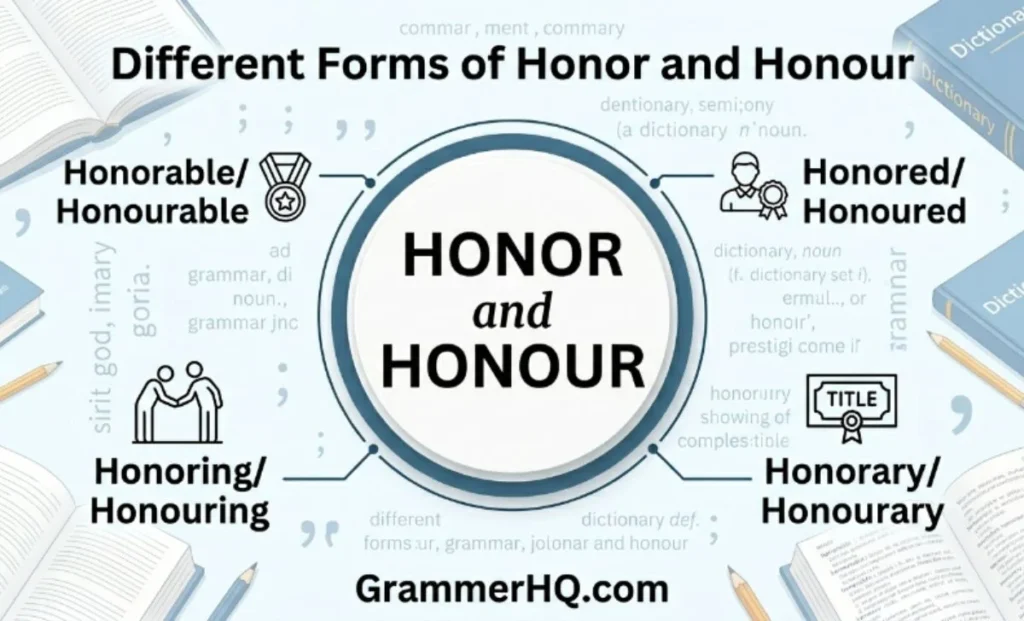
Several related words also follow American and British spelling patterns.
| Word Type | American English | British English |
|---|---|---|
| Noun | Honor | Honour |
| Verb | Honor | Honour |
| Adjective | Honorable | Honourable |
| Adverb | Honorably | Honourably |
Honor vs Honour in Example Sentences

Here are side-by-side comparisons:
| American English | British English |
|---|---|
| It is an honor to meet you. | It is an honour to meet you. |
| We honor our parents. | We honour our parents. |
| She graduated with honors. | She graduated with honours. |
| The organization honored volunteers. | The organisation honoured volunteers. |
Common Mistakes to Avoid
1. Mixing Both Spellings
❌ Incorrect:
We honor our traditions and preserve our honour.
✅ Correct (American):
We honor our traditions and preserve our honor.
✅ Correct (British):
We honour our traditions and preserve our honour.
2. Assuming One Spelling Is Wrong
Neither spelling is incorrect. Both are accepted depending on the variety of English.
3. Switching Styles in Formal Writing
Academic papers, essays, and professional documents should maintain one spelling style throughout.
Similar American and British Spelling Differences
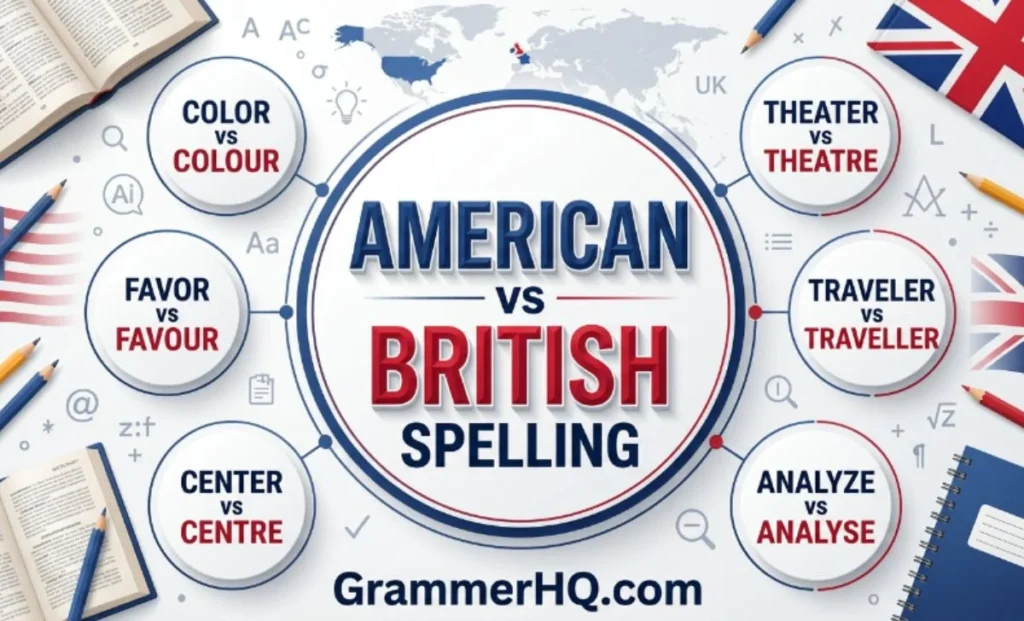
If you’re learning English, you may also encounter these spelling differences:
| American English | British English |
|---|---|
| Color | Colour |
| Humor | Humour |
| Favor | Favour |
| Behavior | Behaviour |
| Labor | Labour |
Recognizing these patterns can help you remember honor vs honour.
Honor or Honour Pronunciation
- Both honor (American English) and honour (British English) are pronounced the same despite their different spellings.
- The correct pronunciation is “ON-er” (/ˈɒn.ər/ in British English and /ˈɑː.nɚ/ in American English).
- The “H” is silent, so the word begins with an “O” sound.
- Whether you write honor or honour depends on the English variety you use, but the pronunciation remains almost identical.
- Learning the silent H makes it much easier to pronounce this common English word naturally and confidently.
Honour Spelling UK
- In British English, the correct spelling is honour, with the letter “u” included.
- This spelling is used throughout the UK, as well as in countries like Canada, Australia, and New Zealand.
- The American English version is honor, which drops the “u” but has the same meaning and pronunciation.
- If you’re writing for a British audience, honour is the correct and preferred spelling.
- Using the right regional spelling keeps your writing accurate, professional, and consistent.
Memory Trick to Remember the Difference
A simple memory trick is:
British English usually keeps the letter “u.”
Examples:
- colour
- favour
- behaviour
- honour
Think:
United Kingdom = Uses “U”
Meanwhile, American English often removes the “u.”
FAQs
Is “honor” correct?
Yes. Honor is the standard American English spelling.
Is “honour” correct?
Yes. Honour is the standard British English spelling.
Do honor and honour mean the same thing?
Yes. They have exactly the same meaning.
Which spelling should students use?
Students should follow the spelling style required by their school, exam board, or audience.
Is one spelling more formal than the other?
No. Both spellings are equally formal within their respective varieties of English.
Final Thoughts
The debate over honor or honour is actually quite simple. Both spellings are correct, and both carry the same meaning of respect, dignity, and recognition.
Use honor if you are writing in American English, and use honour if you follow British English. Most importantly, stay consistent throughout your writing.
Once you understand this distinction, you’ll be able to write confidently in essays, professional documents, and everyday communication.
Read More Blogs:
- Humour or Humor UK vs US English Guide in 2026.
- Crier or Cryer : Meaning Explained Simply and Clearly

Hi, I’m Amelia Parker, a grammar enthusiast and writer at GrammarHQ.com. I specialize in explaining spelling differences, confusing words, and common English mistakes through simple, practical, and easy-to-understand guides.