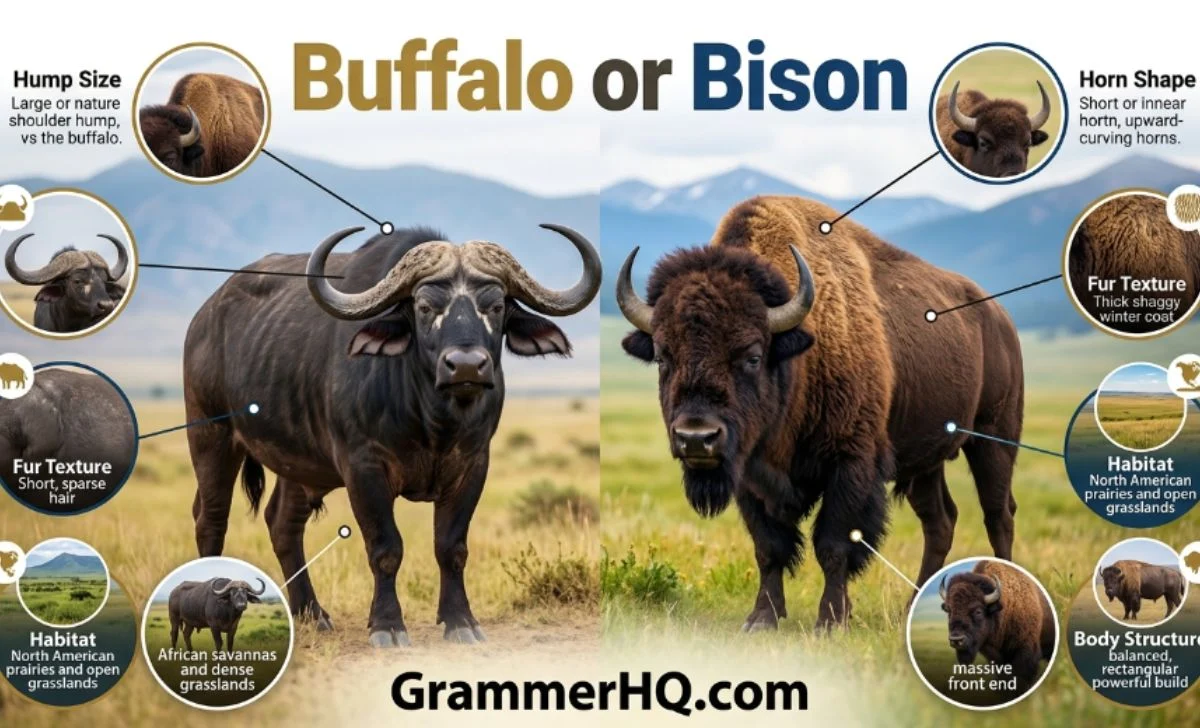
At first glance, Buffalo and Bison look so similar that most people use the terms interchangeably , but they’re actually two distinct species with very different origins, habitats, and physical traits.
Bison are native to North America and Europe, while true Buffalo, such as the African Buffalo and Water Buffalo, originate from Africa and Asia.
The differences go far beyond appearance; they extend to body structure, behavior, climate adaptation, and even domestication history.
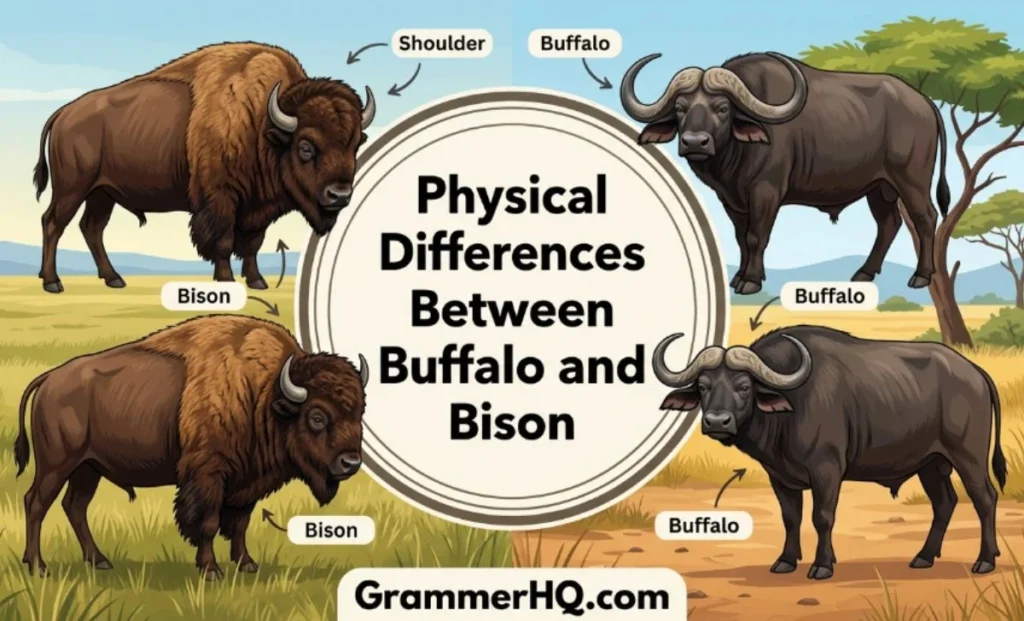
Bison have a large muscular hump and a thick, shaggy coat that helps them survive harsh winters, whereas Buffalo have a leaner build and longer, more curved horns.
In this article, we’ll break down the key differences between Buffalo and Bison in detail, helping you understand exactly what sets these two powerful animals apart.
Quick Answer
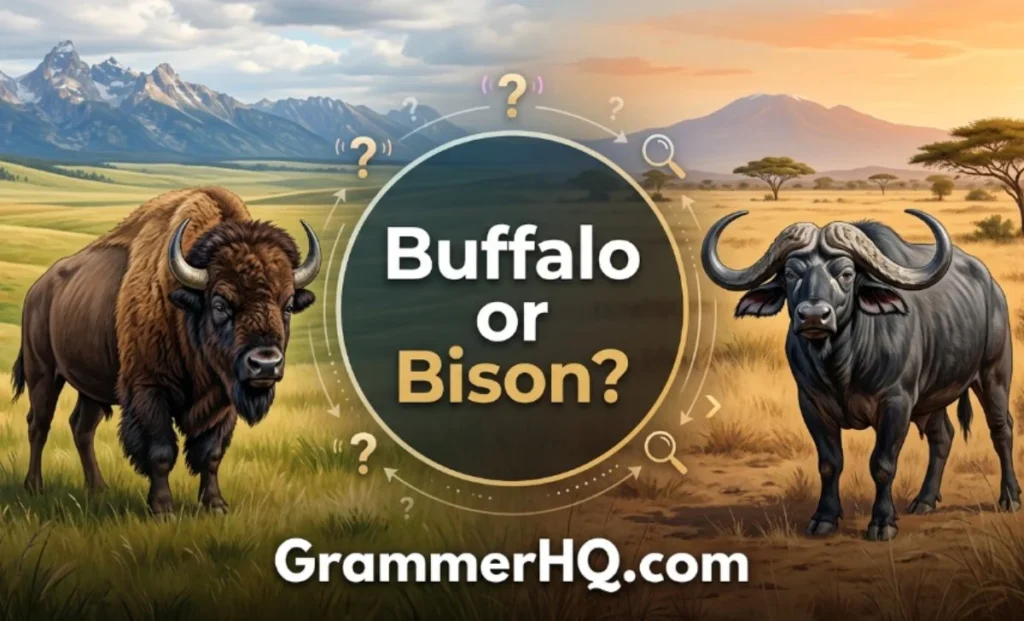
Buffalo and Bison are two different animals despite their similar look. Bison are native to North America and Europe, easily identified by their large shoulder hump and shaggy fur.
Buffalo, found in Africa and Asia, have a leaner body with longer, curved horns and no hump. The simplest way to tell them apart is by checking the hump — Bison have one, Buffalo don’t.
Examples:
- American Bison – Found in the plains of the USA and Canada, known for its massive hump and thick winter coat.
- African Buffalo (Cape Buffalo) – Found in Africa, known for its aggressive nature and large curved horns.
- Water Buffalo – Found in Asia, commonly domesticated for farming and dairy in countries like India and Pakistan.
- European Bison (Wisent) – Found in European forests, slightly smaller than American Bison but still hump-backed.
Pronunciation of Buffalo or Bison
Correct pronunciation helps avoid confusion in conversations.
Buffalo
Pronunciation: BUF-uh-loh
IPA: /ˈbʌf.ə.loʊ/
Bison
Pronunciation: BYE-suhn
IPA: /ˈbaɪ.sən/
Although the words sound different, many people still mix them up because “American buffalo” is commonly used in everyday speech.
Why People Confuse Buffalo and Bison
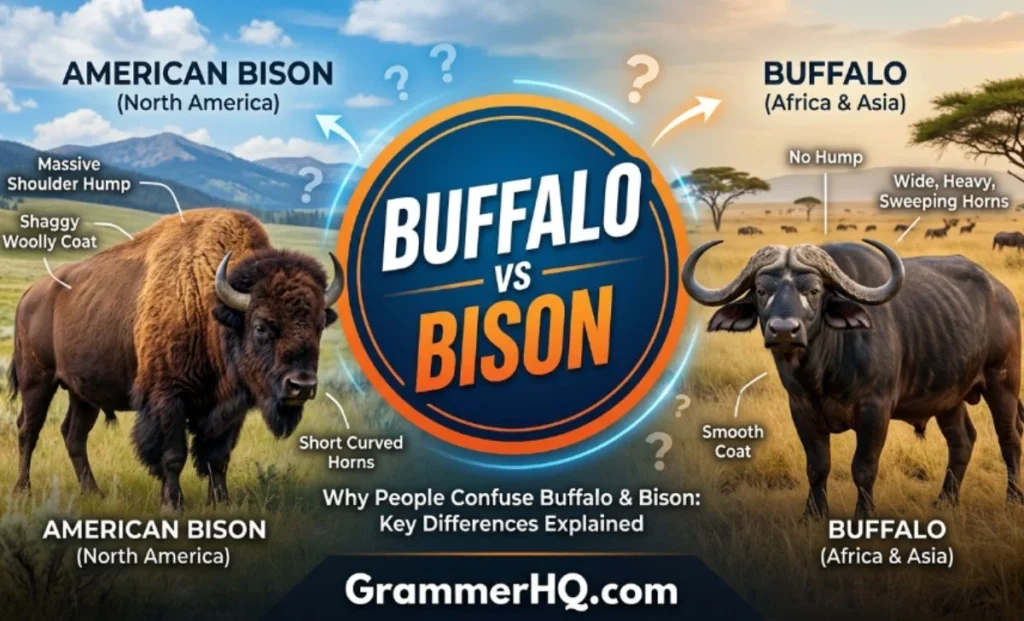
Several factors cause people to confuse buffalo and bison.
Historical Naming
Early European settlers in North America mistakenly called the American bison a buffalo because it looked similar to buffalo species they had seen elsewhere.
The Phrase “American Buffalo”
The term “American buffalo” became popular and remains widely used today, even though the animal is scientifically classified as a bison.
Similar Appearance
Both animals belong to the Bovidae family and share traits such as horns, hooves, and large body sizes.
Cultural Influence
Native Americans, history books, films, and popular culture often use the word buffalo when referring to bison.
Buffalo vs Bison Comparison Table
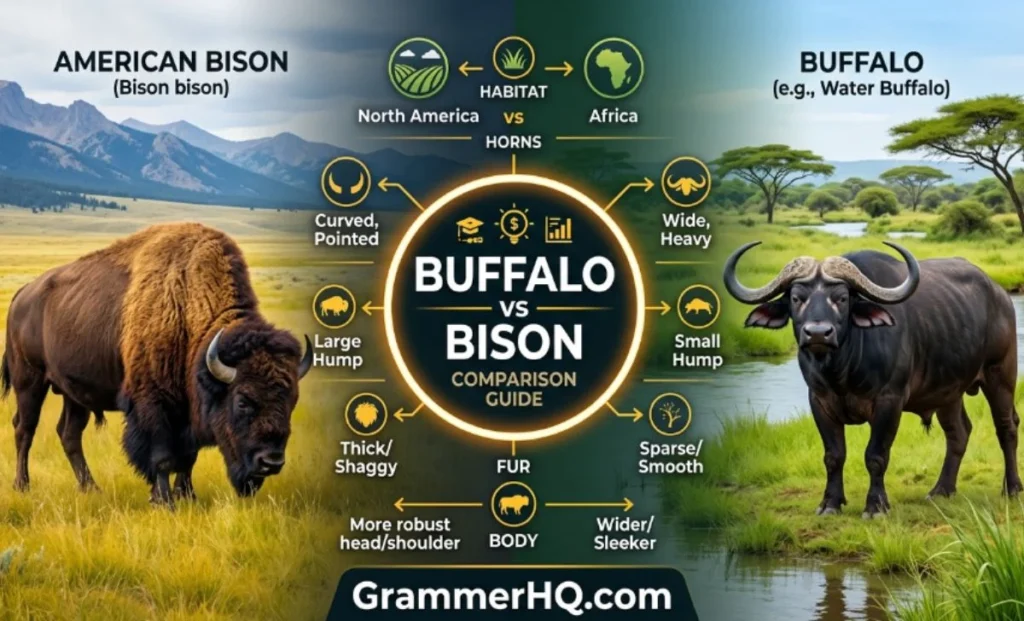
| Feature | Buffalo | Bison |
|---|---|---|
| Scientific Genus | Bubalus / Syncerus | Bison |
| Main Species | Water Buffalo, African Buffalo | American Bison, European Bison |
| Habitat | Africa and Asia | North America and Europe |
| Shoulder Hump | No | Yes |
| Fur | Thin or sparse | Thick shaggy fur |
| Climate | Warm climates | Cold climates |
| Horn Shape | Long and curved | Short and curved |
| Beard | Usually absent | Prominent beard |
| Body Shape | More streamlined | Large front-heavy body |
Physical Differences Between Buffalo and Bison
Shoulder Hump
One of the easiest ways to identify a bison is by its large shoulder hump. Buffalo do not have this feature.
Fur Coat
Bison have thick fur and a shaggy mane that helps them survive harsh winters in grasslands and prairies. Buffalo have thinner coats because they live in warmer regions.
Horns
Buffalo usually have larger and longer horns. African buffalo possess heavy curved horns, while water buffalo have wide, sweeping horns. Bison horns are generally shorter.
Size and Weight
Both animals are large mammals, but bison often appear bulkier because of their hump, dense fur, and heavy front body.
Beard and Mane
Bison have a noticeable beard and thick mane around the neck. Most buffalo species lack these features.
Habitat and Geographic Distribution
Where Do Buffalo Live?
True buffalo are native to:
- Africa
- Asia
- India
They usually inhabit:
- Savannas
- Wetlands
- Forests
- Grasslands
Where Do Bison Live?
Bison naturally occur in:
- United States
- Canada
- Europe
Their preferred habitats include:
- Prairies
- Great Plains
- Grasslands
- Open forests
Easy Trick to Remember Buffalo or Bison

Use this simple memory trick:
Bison = Big Hump + Beard
Buffalo = Big Horns + No Hump
Another easy mnemonic is:
“Bison have a Big hump. Buffalo have Big horns.”
This trick helps people remember the difference instantly.
Historical and Cultural Importance
Great Plains
Millions of bison once roamed the Great Plains of North America.
Buffalo Hunting
Extensive buffalo hunting during the 19th century nearly drove American bison to extinction.
Conservation Efforts
Modern conservation and wildlife preservation programs have helped restore bison populations.
Which Name Should You Use?
Use bison when:
- Writing scientifically.
- Referring to American or European species.
- Producing academic content.
Use buffalo when:
- Referring to African buffalo.
- Referring to water buffalo.
- Using historical or informal American expressions.
For global audiences and SEO content, using both terms together often provides the clearest explanation.
Common Mistakes with Buffalo and Bison
| Mistake | Correct Information |
|---|---|
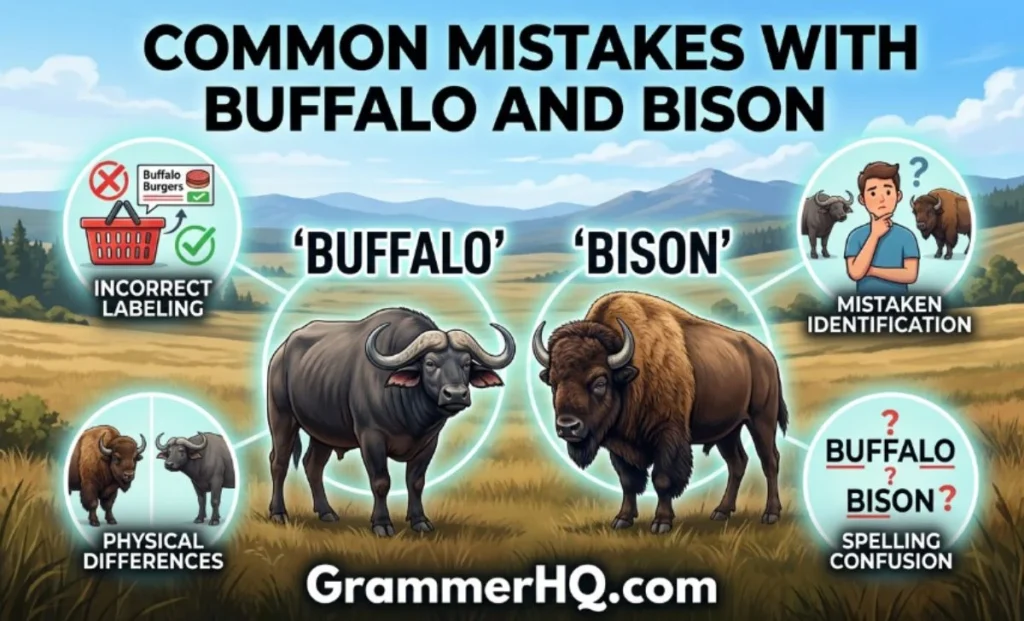
| Calling every bison a buffalo | Not all bison are buffalo |
| Assuming they are identical animals | They are different species |
| Ignoring habitat differences | Buffalo and bison live on different continents |
| Using buffalo in scientific papers | Use “bison” for American species |
Why Are Bison Called Buffalo?
Bison are called buffalo because early European explorers thought they looked like the true buffalo they had seen in Africa and Asia.
The name “buffalo” became widely used and remained common in North America, even though the animal is scientifically a bison.
Today, American bison is the correct biological name, while American buffalo is still accepted as a common name in everyday speech, history, and culture.
This historical naming mistake is why many people still use the two terms interchangeably. Knowing the difference helps avoid confusion between the two distinct animals.
Examples:
- Many people call the American bison a buffalo, but the scientific name is bison.
- Early explorers named the animal buffalo because it resembled the true buffalo they already knew.
Buffalo or Bison in Everyday Examples
“The Yellowstone tour included sightings of several American bison.”
News
“Conservation programs continue to increase bison populations across North America.”
Social Media
“I finally saw wild bison during my trip to Yellowstone!”
Formal Writing
“The American bison is one of the largest land mammals in North America.”
American Buffalo
The American buffalo is actually the American bison, the largest land mammal in North America. Although many people call it a “buffalo,” the scientifically correct name is American bison because true buffalo are native to Africa and Asia.
The American bison is known for its massive shoulder hump, thick shaggy fur, and strong build. Today, it is a protected species and an important symbol of North American wildlife and conservation.
The term “American buffalo” remains common in everyday language, history, sports teams, and popular culture, even though “American bison” is more accurate.
Examples:
- We saw several American buffalo (bison) grazing in Yellowstone National Park.
- The American buffalo is one of the most iconic animals in North America.
FAQs
Are buffalo and bison the same animal?
No. Buffalo and bison are different species.
Is the American buffalo actually a bison?
Yes. The so-called American buffalo is scientifically classified as a bison.
Which animal is bigger, buffalo or bison?
Bison generally appear larger because of their hump and thick fur.
Can buffalo and bison interbreed?
Natural interbreeding is extremely rare because they belong to different genera.
Why do Americans call bison buffalo?
Early settlers mistakenly used the term buffalo, and the name remained popular.
Where do buffalo live?
True buffalo live mainly in Africa and Asia.
Are bison endangered?
Conservation efforts have greatly increased bison populations, although some species still require protection.
Conclusion
Buffalo and bison may look similar, but they are distinct animals with important differences. Bison have a large shoulder hump, thick fur, and mainly live in North America and Europe.
True buffalo live in Africa and Asia and generally lack a shoulder hump. Much of today’s confusion comes from the long-standing use of the phrase “American buffalo” to describe the American bison.
Understanding these differences helps you use the correct term in scientific, educational, and everyday contexts.
When discussing North America’s iconic animal, “bison” is usually the most accurate choice, while “buffalo” should refer to African or Asian species.
Read More Blogs:
- Honor or Honour: Which Spelling Is Correct In 2026
- Why Is “Accidentally” Correct but “Accidently” So Common?

Hi, I’m Amelia Parker, a grammar enthusiast and writer at GrammarHQ.com. I specialize in explaining spelling differences, confusing words, and common English mistakes through simple, practical, and easy-to-understand guides.