Lable or Label, Label is the correct spelling in standard English. Lable is a common spelling mistake and is not accepted as the standard spelling of this word.
Both American and British English use Label for the noun and base verb. However, some verb forms differ: Americans usually write labeled and labeling, while British writers commonly use labelled and labelling.
What Is the Difference Between Label and Lable?
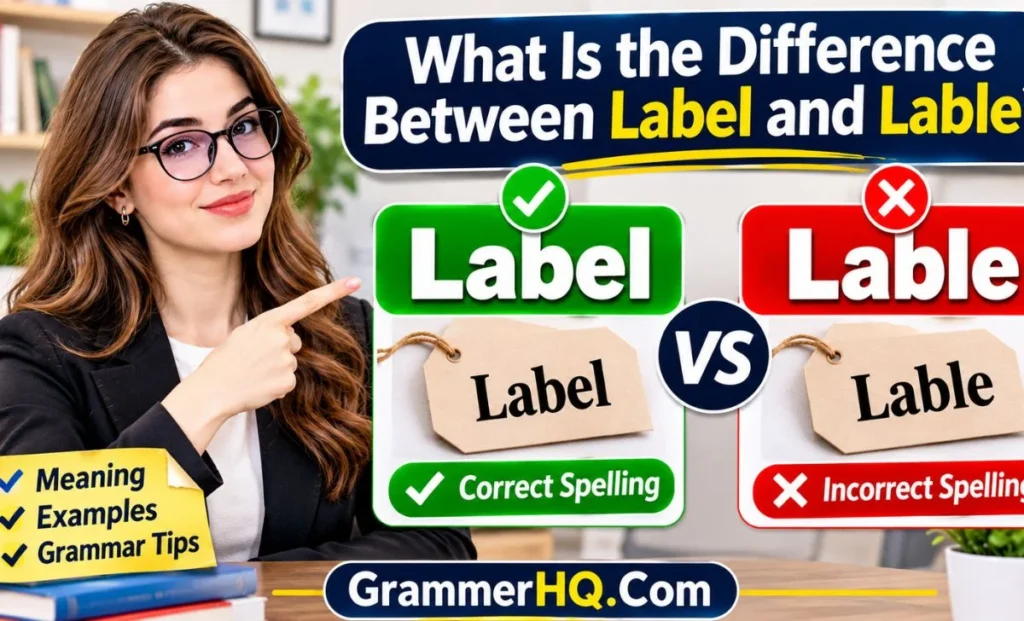
The main difference is spelling: Label is correct, whereas Lable is incorrect when referring to the English word for a tag, description, or identifying mark.
A label provides information about a product, person, object, or category. You may see it on food packaging, clothing, parcels, bottles, and files.
People sometimes write Lable because they remember the sound of the word but place the letters incorrectly. The correct spelling ends in -bel, not -ble.
| Spelling | Status | Explanation |
|---|---|---|
| Label | Correct | Standard English spelling |
| Lable | Incorrect | Common misspelling |
Examples:
- Correct: Please check the label before buying the product.
- Incorrect: Please check the lable before buying the product.
Always use Label in schoolwork, professional writing, emails, and everyday communication.
What Does Label Mean?
The word Label can function as both a noun and a verb. Its meaning depends on how it is used in a sentence.
1. Label as a noun
As a noun, a label is a piece of information, a tag, or a description attached to something to identify it or explain its contents.
Examples:
- The bottle has a clear label.
- Read the food label to check its ingredients.
- She removed the price label from her new jacket.
2. Label as a verb
As a verb, label means to attach a label to something, identify an item, or describe someone or something using a particular name or category.
Examples:
- Please label each box before moving it.
- The teacher asked students to label the diagram.
- People should not label others without understanding them.
In simple terms, a label identifies something, while to label means to identify or describe it.
How to Use Label in a Sentence
The word label is commonly used in everyday English, education, shopping, business, and technology. Understanding its context makes it easier to use correctly.
Here are some natural examples:
- Shopping: Check the label for the product’s price and details.
- Food: The nutrition label lists the amount of sugar in the product.
- Clothing: My new shirt has a washing label inside.
- Shipping: Write the delivery address on the shipping label.
- Education: Students must label the parts of the human body.
- Business: The company created a new label for its products.
- Technology: I added a label to organize my emails.
- Everyday conversation: It is unfair to label someone without knowing them.
These examples show that label can describe an identifying tag or the action of identifying something.
Label, Labels, Labeled, and Labeling: Correct Word Forms
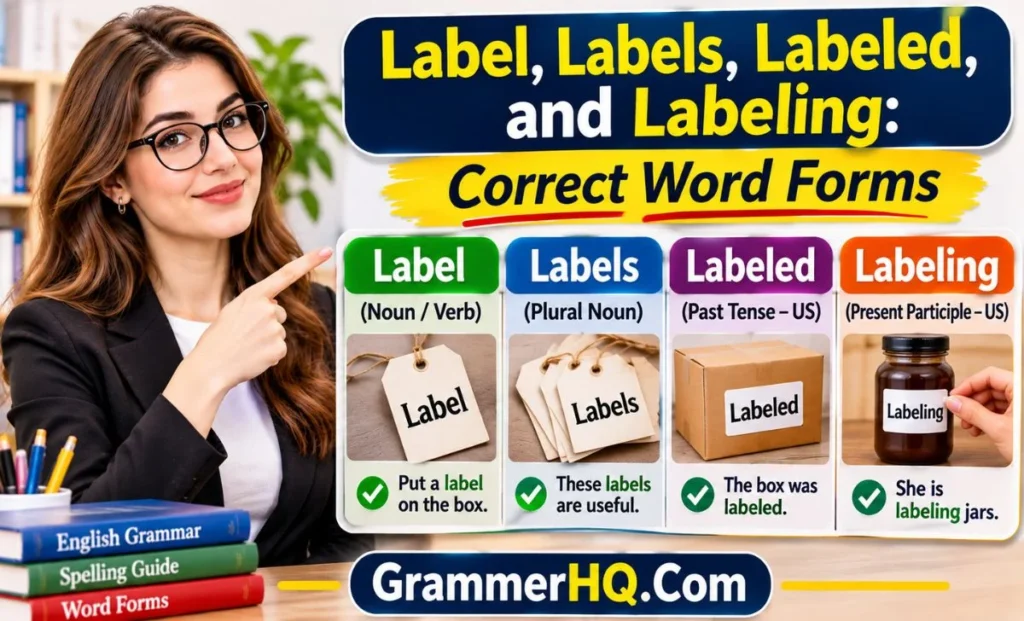
One common source of confusion is how to spell different forms of label. The spelling changes slightly when certain suffixes are added.
| Word | Usage |
|---|---|
| Label | Singular noun or base verb |
| Labels | Plural noun or third-person verb |
| Labeled | American past tense |
| Labelled | British past tense |
| Labeling | American -ing form |
| Labelling | British -ing form |
Examples:
- Label: Put a label on the box.
- Labels: These labels show the product details.
- Labeled: She labeled all the files.
- Labelled: She labelled all the files.
- Labeling: He is labeling the containers.
- Labelling: He is labelling the containers.
Remember: that Labels is the correct plural form. Do not write Lables.
Label vs. Labelled: American and British English
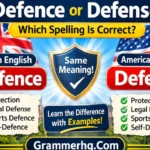
Both American and British English use Label as the standard spelling. The difference appears when adding certain endings to the word.
Tài liệu cơ bản Hợp chúng quốc Hoa Kỳ – Cổng thông tin Bộ Ngoại Giao
American English
- Label
- Labeled
- Labelingflag of the United KingdomBritish English
- Label
- Labelled
- Labelling
Why does this happen?
In American English, writers generally keep one final l when adding endings such as -ed and -ing. British English generally doubles the final l in these forms.
Both systems are correct in their respective varieties of English. Choose one style and use it consistently throughout your writing.
Why Is Lable a Common Spelling Mistake?
The mistake usually happens because English spelling does not always match the way words sound.
When people hear label, they may remember the pronunciation but confuse the position of the final letters. As a result, they write Lable instead of Label.
There is also a simple visual reason: English contains many words ending in -ble, such as:
- Table
- Cable
- Stable
- Bubble
- Trouble
Because these words are familiar, some writers mistakenly apply the same letter pattern to Label.
Easy way to remember: Think of the word Label as two parts: La + bel. Remember that the letter E comes before the final L.
Correct: L-A-B-E-L
Incorrect: L-A-B-L-E
Label vs. Tag: What’s the Difference?
Label and Tag have similar meanings, but they are not always interchangeable.
| Label | Tag |
|---|---|
| Provides identifying information | Identifies or marks something |
| Often includes descriptions or details | May be a small attached marker |
| Common on food packaging | Common on clothing and luggage |
| Can also describe or categorize someone | Can identify or categorize digital content |
Examples:
- The food label contains nutritional information.
- The price tag shows how much the shirt costs.
A label often provides more detailed information, while a tag may simply identify or mark something. However, their meanings can overlap.
How Do You Pronounce Label?
The correct pronunciation of label is:
- IPA: /ˈleɪ.bəl/
- Simple pronunciation: LAY-buhl
- Syllables: 2
- Stress: First syllable
The word has two syllables: La-bel. The first syllable sounds like “lay,” and the second sounds like “buhl.”
Remember that changing the spelling to Lable does not make it correct.
Common Spelling Mistakes Related to Label
Writers sometimes make mistakes when adding endings to label. Here are the correct forms to remember.
| Incorrect spelling | Correct spelling |
|---|---|
| Lable | Label |
| Lables | Labels |
| Labled | Labeled / Labelled |
| Labling | Labeling / Labelling |
| Labell | Label |
Pay attention to these differences, especially when writing assignments, product descriptions, business documents, and emails.
FAQs
1. Is it Lable or Label?
Label is correct. Lable is a common misspelling and should not be used in standard English writing.
2. Is Lable ever correct?
No. Lable is not the standard spelling of the English word label. Use Label instead.
3. What does Label mean?
A label is a tag, name, or description used to identify something or provide information about it.
4. Is Label American or British English?
Label is correct in both American and British English. The difference appears in forms such as labeled/labelled and labeling/labelling.
5. What is the plural of Label?
The plural is Labels. For example: “The labels on these bottles are easy to read.”
6. Is it Labeled or Labelled?
Both are correct. Labeled is the standard American spelling, while labelled is commonly used in British English.
7. Is it Labeling or Labelling?
Both spellings are correct. Americans generally use labeling, while British writers generally use labelling.
8. Is Label a noun or a verb?
Label can be both. As a noun, it means a tag or description. As a verb, it means to identify or describe something.
9. How do you remember the correct spelling of Label?
Remember the letter sequence L-A-B-E-L. The E comes before the final L. This helps prevent the common mistake Lable.
10. What is the past tense of Label?
The past tense is labeled in American English and labelled in British English.
Final Verdict: Label or Lable?
The correct spelling is Label, not Lable. Both American and British English use Label as the standard spelling. However, their spelling conventions differ when adding endings such as -ed and -ing.
Use Label when referring to a product tag, description, identifying mark, or the action of identifying something. Remember its correct spelling, and you can avoid this common English spelling mistake in everyday and professional writing.
Discover More Blogs:
- Hola or Ola: What’s the Difference?
- Dammit vs. Damnit: Which Spelling Is Correct?
- Resume vs. Résumé: What’s the Difference and Which Should You Use?
- Send vs. Sent: What’s the Difference and When Should You Use Each?