If you are confused about title vs. tittle, both are real English words, but they have different meanings.
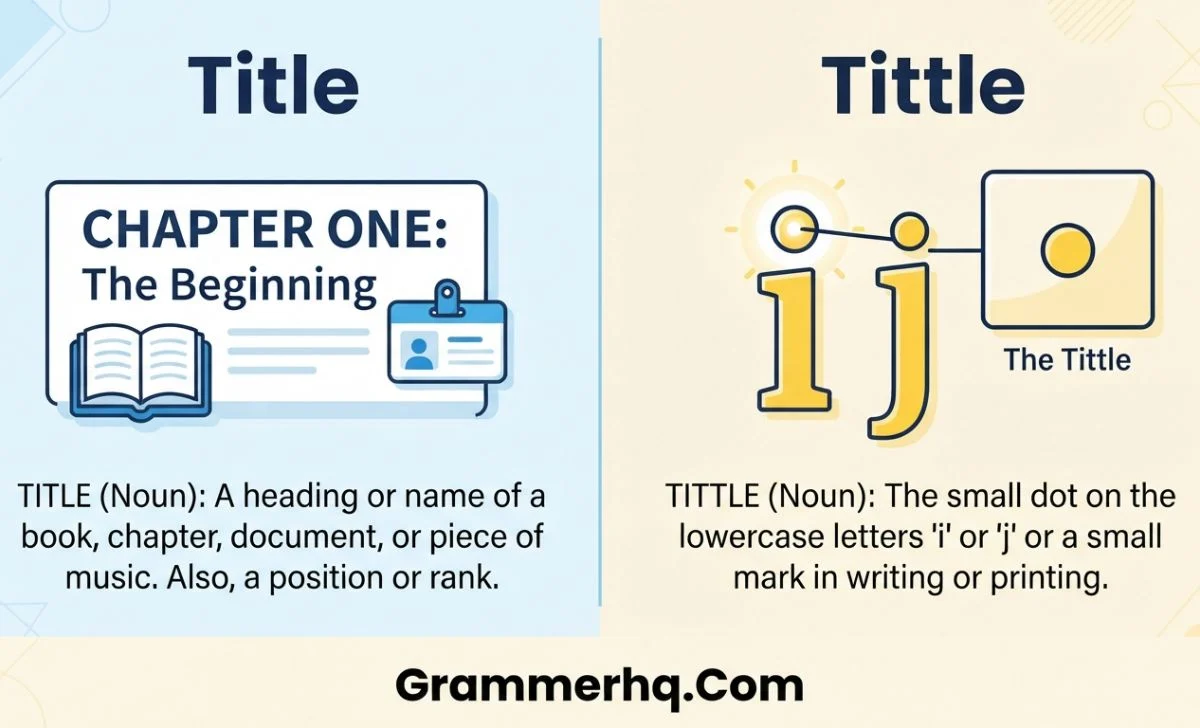
Title is the common word for the name of a book, movie, article, or the position a person holds.
Tittle is a much less common word for a small mark in writing, such as the dot over a lowercase i or j, and it can also mean a very small amount or detail.
Quick Answer
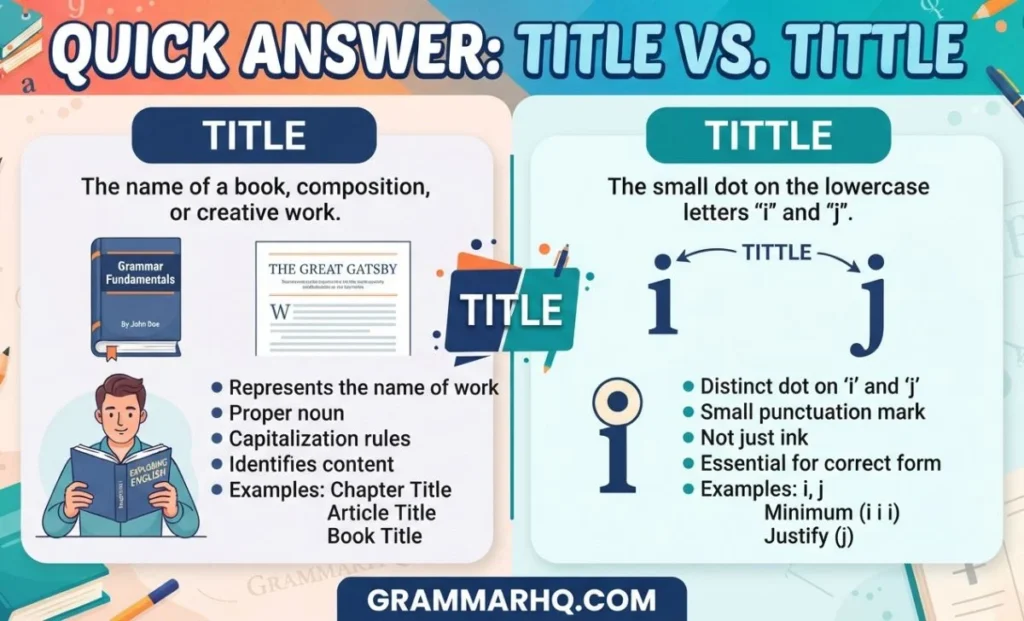
Title = a name, heading, position, rank, or other designation.
Tittle = a small mark in writing, especially the dot over i or j; it can also mean a tiny amount or detail.
So, tittle is not simply a misspelling of title. Both words are correct, but title is the word you need in almost all everyday situations involving names, headings, or positions.
What Does “Title” Mean?
Title is a very common English word. It can refer to:
- The name of a book, movie, song, or article
- A heading on a page or section
- A person’s job or professional position
- A rank or honorific
- A championship or other recognized status
For example:
- What is the title of the book?
- Her job title is editor.
- The article has a clear title.
Title can also be used as a verb. To title something means to give it a name.
She titled her essay “A New Beginning.”
What Does “Tittle” Mean?
Tittle is a real English word, but it is uncommon in everyday writing.
Its most specific meaning is a small mark in writing or printing, especially a diacritical mark such as the dot over a lowercase i or j.
For example:
The tittle above the lowercase i is clearly visible.
Tittle can also mean a very small part, amount, or detail. This sense is much less common in modern everyday English.
Title vs. Tittle: The Main Difference
| Word | Meaning | Everyday Use |
|---|---|---|
| Title | Name, heading, position, rank, or designation | Very common |
| Tittle | Small mark or tiny amount/detail | Uncommon |
The easiest way to remember them is:
Title = a name or position
Tittle = a tiny mark or detail
Title vs. Tittle Pronunciation
The words are also pronounced differently.
- Title: /ˈtaɪ.təl/ — roughly TY-tuhl
- Tittle: /ˈtɪt.əl/ — roughly TIT-uhl
The main difference is the first vowel sound.
Title starts with the long i sound in time.
Tittle starts with the short i sound in sit or little.
So, they may look similar, but they do not sound the same.
Title vs. Tittle in American and British English
There is no different spelling for American and British English in this case. Both varieties use title for a name, heading, position, or rank.
Both also recognize tittle as a word for a small mark or tiny amount. Collins lists the word in both American and British English.
The important difference is frequency, not spelling. Title is common in both varieties, while tittle is uncommon.
Why Do People Confuse Title and Tittle?
The confusion is understandable because the words look almost identical. Tittle has an extra t, and it is a much rarer word.
When people see an unfamiliar word, they may assume tittle is simply a typo for title. But that is not always true. Tittle has its own dictionary meaning.
The meaning of the sentence tells you which word is correct.
Common Title vs. Tittle Mistakes
If you are talking about the name of a book, article, movie, or song, use title.
❌ What is the tittle of this book?
✅ What is the title of this book?
If you are talking about the small dot over an i or j, tittle can be correct.
❌ The title above the lowercase i is missing.
✅ The tittle above the lowercase i is missing.
So the mistake is not that tittle is always wrong. The mistake is using it when you actually mean title.
“Jot and Tittle” Meaning
You may also come across the expression “jot and tittle.”
It means every tiny detail or the smallest possible part. The expression is formal and is much less common than ordinary expressions such as every detail.
For example:
The editor did not change a jot or tittle of the original text.
This is one of the places where tittle is still recognizable outside technical discussions of writing.
Is Tittle a Misspelling of Title?
No. Tittle is a legitimate English word.
However, if you mean the name of something, its heading, or someone’s position, title is the correct word.
A useful rule is:
Name or position → title
Tiny mark or tiny detail → tittle
FAQs
Is “title” or “tittle” correct?
Both are correct words, but they have different meanings. Title is used for names, headings, positions, and ranks. Tittle refers to a small mark or a very small amount or detail.
What is the difference between title and tittle?
Title usually means a name, heading, position, or rank. Tittle means a small mark in writing, especially the dot over i or j, or a very small amount.
Is tittle a real English word?
Yes. Tittle is a real English word found in dictionaries. It is simply much less common than title.
What is the dot over the letter i called?
The small dot over a lowercase i is called a tittle. The same term can apply to the dot over j.
How do you pronounce title and tittle?
Title is pronounced /ˈtaɪ.təl/, roughly “TY-tuhl.” Tittle is pronounced /ˈtɪt.əl/, roughly “TIT-uhl.”
Is tittle the British spelling of title?
No. Tittle is not a British spelling of title. American and British English both use title and tittle with their separate meanings.
Is tittle commonly used?
No. Tittle is uncommon in modern everyday English. You are much more likely to see title in normal writing.
Can I say “the tittle of a book”?
No. When you mean the name of a book, use title:
The title of the book is …
Can title be used as a verb?
Yes. Title can be a verb meaning to give something a name.
Is “jot and tittle” correct?
Yes. Jot and tittle is a traditional expression meaning every small detail or the smallest part.
Final Answer
Title and tittle are both correct English words, but they are not interchangeable.
Use title for a name, heading, position, rank, or designation. Use tittle for a small mark in writing—especially the dot over i or j—or, in less common usage, for a tiny amount or detail.
Remember: title = name or position; tittle = tiny mark or detail.
👉 Explore More English Tips:

Hi, I’m Amelia Parker, a grammar enthusiast and writer at GrammarHQ.com. I specialize in explaining spelling differences, confusing words, and common English mistakes through simple, practical, and easy-to-understand guides.